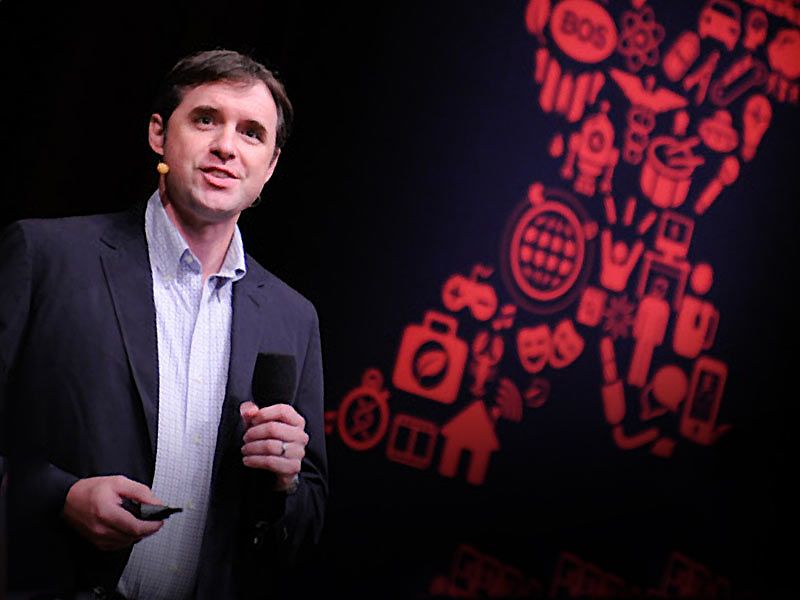
How does cancer know it’s cancer? At Jay Bradner’s lab, they found a molecule that might hold the answer, JQ1 — and instead of patenting JQ1, they published their findings and mailed samples to 40 other labs to work on. An inspiring look at the open-source future of medical research. (Recorded at TEDxBoston, June 2011, in Boston, Massachusetts. Duration: 12:48.)
Watch Jay Bradner’s talk on TED.com, where you can download it, rate it, comment on it and find other talks and performances from our archive of 1,000+ TEDTalks.


Pietro Di Bernardino commented on Jul 27 2012
I am very interested as a layman to enquire as to identifying for certainty whaether we are able to find chemical composition differences between normal cells and cancerous cells.
If this is possible then is there not a way of introducing a “medication” or anti-body into a body that will “eat” or fight only that chemical compostion which distinguishes that cancer cell from a normal cell. If such approach cannot be done in one go then to identify the various chemicals in the cancer cells which distinguish such from normal cells and then apply agents/anti-bodies to the body that will “eat” each of those chemicals one by one to ultimately then consume any dead cell or cancer cell. Please can someone comment on what I am missing by making such a proposal
Pingback: James Bradner e la ricerca open source per la cura del cancro al TED | Indipedia – Indipendenti nella rete
Pingback: TED Blog | Open-source cancer research: Jay Bradner on TED.com | Linux Supersaniya