The scourge of cancer has ripped through bodies, families, and generations for so long and with such power that it feels almost invincible. Biologist Paul Ewald—widely regarded as the leading expert in the emerging field of evolutionary medicine—and co-author Holly Swain Ewald may have found a way of attacking the intractable killer, which they detail in our new TED Book Controlling Cancer: A Powerful Plan for Taking on the World’s Most Daunting Disease. The Ewalds believe that viruses may be at the heart of the onset of cancer and we can attack the disease through an early attack on the virus. In this important study, they form an innovative plan for rethinking and eradicating one of the world’s deadliest diseases. We recently spoke with Paul about his new book.
Why is cancer so hard to fight?
Treating cancer involves both attacking and protecting human cells at the same time. It is difficult to devise chemotherapies or vaccines that have sufficient precision to damage the cancerous cells without harming the normal cells. Approaches to preventing cancer have included medical procedures that are not available to everyone or lifestyle changes such as smoking cessation and reduction in sun exposure that have proven difficult for people to abide by. We’re just now beginning to develop new methods of control, such as vaccines against infectious causes of cancer, which circumvent these problems
What is new about your approach to controlling cancer?
We are using evolutionary principles to reformulate our understanding of cancer. This perspective allows us to understand major obstacles associated with some approaches and the unappreciated potential for others.
How are viruses so important in the onset and evolution of the disease?
Viruses evolve to compromise a cell’s fundamental barriers to cancer in a variety of ways. These manipulations allow them to persist within people for long periods of time. The end result is that viruses push infected cells to the brink of cancer. Mutations finish the process.
We often hear that lifestyle choices and hereditary factors play a big part in the onset of cancer. Is that true?
Cancers are caused by combinations of factors. A balanced assessment of the causes of cancer must address all three categories of causes—hereditary factors, infectious agents, and noninfectious environmental exposures. But we understand the relative importance of these causes and the interactions between them for only about a quarter of all human cancer. Family studies tell us that hereditary factors play a relatively small role in common cancers. Generally they increase a person’s vulnerability to infectious and noninfectious environmental agents. Lifestyles can play important roles because they can change the exposure to environmental hazards that cause mutations and to cancer-causing infections, and can alter the body’s defenses against cancer. A lifestyle that exposes skin to ultraviolet light, for example, can lead to skin cancer because ultraviolet rays cause mutations. A lifestyle that exposes a person to unprotected sex with many sexual partners or involves intravenous drug use can increase the risks of cancer because cancers causing infections are often transmitted by sex, intimate kissing, and contaminated needles.
How will we fight cancer in the future?
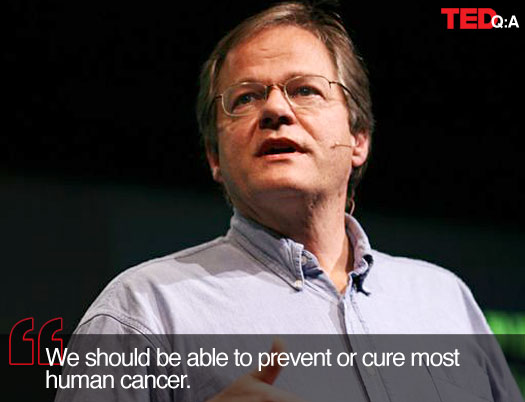
Prevention is better than cure, and cure is better than palliative care. If we shape the future well we will be shifting efforts toward prevention. Because cancer is almost always caused by combinations of factors, we need to identify those causes of cancer that can be prevented effectively and with low cost. Evolutionary considerations tell us that chemotherapy and vaccines that target the cancer cells will almost always be associated with serious adverse effects on normal cells. When cancers are caused by infections we have better options because infectious organisms, being different from human cells, can be targeted with less damage to human cells. We can prevent infection by vaccination and blocking of transmission. Increasingly we should be able to treat cancer-causing infections by therapeutic vaccines, antiviral compounds, and sometimes even by antibiotics, as is now the case for some stomach cancers. The crystal ball is a bit murky because we don’t yet know how many human cancers are caused by infection–It is at least 20% and at most about 95%. Evolutionary considerations suggest that it will turn out to be higher rather than lower within this range. Let’s hope so, because in that case we should be able to prevent or cure most human cancer.
Controlling Cancer: A Powerful Plan for Taking on the World’s Most Daunting Disease is part of the TED Books series, which is available for the Kindle and Nook as well as on Apple’s iBookstore.
Comments (8)
Pingback: American Steroids Online
Pingback: 10 talks to help you better understand cancer | Krantenkoppen Tech
Pingback: Rethinking cancer treatment: 9 great talks, plus 1 book | Krantenkoppen Tech
Pingback: TheGoldenAura » Blog Archive » Recommended Reading January 24, 2012