19 August 2009
TEDxKibera: From a humble location comes a visionary event

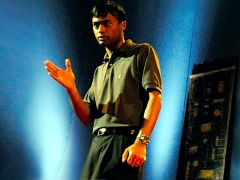
On Saturday August 15, a TEDx event was held in Kibera, the largest squatter city in Africa and home to nearly a million Kenyans. Suraj Sudhakar, an Acumen Fellow, hosted the ambitious event. Sudhakar has begun several projects in low-income communities, from improving housing conditions through financial consolidation to sanitation by promotion of the Eco-toilet concept. His vision for the TEDx conference was to spark discussion on subjects other than HIV/AIDS and poverty, which are commonly associated with Kibera.
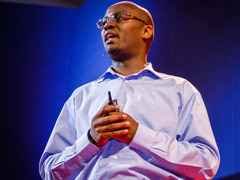
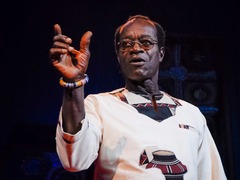
Speakers included Tonee Ndungu of the Kenya Wazimba Youth Foundation which uses mobile phones for large-scale networking and communication, Otieno Gomba founder of Ghetto Art, a studio for Kibera's artists, and software developer and tech blogger Wilfred Mworia.
Mworia has an engaging account of the afternoon on his blog, and provides a link to his Flickr account with many photos of this inspirational event. For even more photos, check out Tonee Ndungu's twitpics.
The event in Mworia's words:
I attended TEDxNairobi a week earlier which was a much much bigger event at a bigger venue. But the interesting thing is, even being in this smaller event being held in the middle of a slum, in a shanty church building, surrounding by the dirt and grime of Kibera… there was still great inspiration (if not greater) and great ideas! And I think that’s the beauty of TED, the fact that despite where you are, in whatever circumstances, people (if motivated enough) will always come up with great ‘ideas worth sharing’! And that says something very deep about the human spirit and the dignity of human beings. That whether rich or poor we all have that capacity for creativity.
For more insight on squatter cities like Kibera, watch Stewart Brand's 2006 TED Talk and Robert Neuwirth's 2005 TED Talk.
Photo: Tonee Ndungu at TEDxKibera August 15, 2009, in Nairobi, Kenya. Credit: Wilfred Mworia
31 July 2009
The Market Maker: Eleni Gabre-Madhin
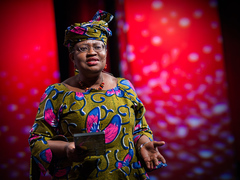
Following up on economist Eleni Gabre-Madhin's 2007 TEDTalk on Ethiopian markets comes an episode from PBS' award-winning documentary series Wide Angle titled "The Market Maker." Anchor Aaron Brown traveled to Ethiopia and toured the country with Gabre-Madhin, where he witnessed the trials faced by her Ethiopia Commodity Exchange, and the effects of the system on the economy there.
The story starts with Gabre-Madhin's outrage over the 1984 famine that left over one million Ethiopians dead despite the surplus of food that existed in the southern part of the country. Ever since 2002 (when another famine came), she's been determined to eliminate food waste. So she moved back to her country of birth and set up the ECX to create a trustworthy market for local farmers, distributors and exporters.
In a country with millions of uneducated farmers whose knowledge of trading is undermined by centuries of old-costumed and unreliable policies, Gabre-Madhin has more than enough work cut out for her. Adding to the enormity of the task, ECX was only eight months old when the national government asked them to take over the market for coffee (Ethiopia's largest exported crop by far), which threw the plan for slow expansion out the window.
This nuanced portrait by Wide Angle shows the complexity of ECX's economic and humanitarian missions, from administrative and bureaucratic issues to the plight of farmers during rainless seasons. While "The Market Maker" has already aired on TV in the United States, you can catch the full episode on PBS' website.
And don't forget to watch Eleni Gabre-Madhin's 2007 TEDTalk on this engaging subject.
22 April 2009
How texting and GoogleMaps helped Kenyans survive crisis: Erik Hersman on TED.com
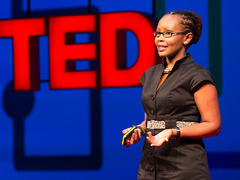
At TEDU 2009, Erik Hersman presents the remarkable story of Ushahidi, a GoogleMap mashup that allowed Kenyans to report and track violence via cell phone texts following the 2008 elections, and has evolved to continue saving lives in other countries during the crucial first three hours of any crisis. (Recorded at TEDU 2009, February 2009, in Long Beach, California. Duration: 3:57.)
Find out more about Ushahidi.com >>
Find out more about the TED Fellows program >>
Watch Erik Hersman's talk on TED.com, where you can download this TEDTalk, rate it, comment on it and find other talks and performances from our archive of 400+ TEDTalks.
Get TED delivered:
Subscribe to the TEDTalks video podcast via RSS >>
Subscribe to the iTunes video podcast
Subscribe to the iTunes audio podcast
Get updates via Twitter >>
Join our Facebook fan page >>
Subscribe to the TED Blog >>
09 April 2009
George Ayittey on "Dead Aid"

Economist George Ayittey gave a blistering talk at TEDGlobal 2007, laying out his case that not only has Western aid not helped in most African countries -- it's actually hurting.
We asked Ayittey for his thoughts on the new book Dead Aid, which has lately been burning up the talk shows and opinion columns with a message similar to Ayittey's. Author Dambisa Moyo says that aid is killing the very countries it's supposed to help. She singles out for criticism the celebrity crusades to "save Africa," and the skewing view they present of African life. Here's a snippet of what Ayittey says about the issues Moyo raises; for the full interview, hit the jump:
If you want to help American farmers, you ask them what sort of help they need and whether such assistance is working. Why don’t Americans ask Africans what type of aid they need and whether the aid Americans have provided is working? So what is wrong with an African, Dambisa, telling Americans that the foreign aid they are providing isn’t working and it is “Dead Aid”?
Read the full interview, after the jump >>
Download the unedited notes for this interview, including reading list, sources and much more >>
27 March 2009
An immune system for the planet: Exclusive interview with Nathan Wolfe

Using genetic sequencing, needle-in-a-haystack research, and dogged persistence (crucial to getting spoilage-susceptible samples through the jungle and to the lab), Nathan Wolfe has proven what was science-fiction conjecture only a few decades ago -- not only do viruses jump from animals to humans, but they do so all the time. Along the way Wolfe has discovered several new viruses, and is poised to discover many more.
The TED Blog interviewed Wolfe over the phone shortly before his appearance at the Skoll World Forum on Social Entrepreneurship. He discusses the fact that vaccines often act as a crutch after the failure of preventative measures against disease, the need for a "global immune system" implemented through communication technologies such as SMS, and occasions when it's professionally acceptable -- and socially crucial -- to eat rodents. Here's a snippet:
I think about the secondary effects of diseases like AIDS that cause a population's immune system to be suppressed, as a whole. I think of this as a tear in the planet's meta-immune system. This tear increases the possibility that a new virus will enter. With immunosuppressed hunters, a virus that normally couldn't survive or adapt to human populations might get a few extra generations and be permitted to adapt to these individuals and humanity.
Read the full interview, after the jump >>
21 August 2008
Africa's brain drain may have hidden benefits
Each year, untold numbers of bright young Africans -- doctors and nurses, scientists and programmers -- leave their home countries to live and work abroad. This continental "brain drain" has the predictable effect:
Many experts believe the flight of health workers, scientists, and teachers hinder the continent's development. "It will be impossible to achieve an African renaissance without the contributions of the talented Africans residing outside Africa," writes Ravinder Rena of the Eritrea Institute of Technology. ....
But a new report from the Council on Foreign Relations, titled "Is Brain Drain Good for Africa?", suggests two upsides. First, it points out that remittances -- the money that expatriate workers send home to their families -- have become a meaningful part of some African economies:
A March 2008 paper by economists William Easterly and Yaw Nyarko says remittances to Africa are likely undercounted, but on average they are equivalent to 81 percent of the foreign aid (PDF) received by an individual country.
And second, the report suggests that a significant number of expatriates eventually return home to work, envigorated by exposure to global markets and ideas, and often charged with a mission to improve the lives of their compatriots. (Sociologist Rubin Patterson calls this phenomenon "brain circulation.") Several TEDTalks speakers are examples of this -- like Patrick Awuah, pictured above, who left Seattle (and a career at Microsoft) to found the first liberal arts university in his native Ghana. Watch Patrick Awuah's TEDTalk >>
Ideally, the efforts of these returning expatriates will help African states to, eventually, nurture and keep homegrown talent. Earlier this year, 2008 TED Prize winner Neil Turok spoke with CFR's writer on one way to stop the brain drain: by promoting math and science education throughout Africa. Listen to the podcast interview >>
16 June 2008
AfriGadget is one of Time's 50 best websites of 2008
AfriGadget, the fascinating blog that rounds up inventions and hacks from around the African continent, was just named one of Time magazine's 50 best websites of the year. Founded by TED Fellow Erik Hersman (also one of the brains behind Ushahidi), AfriGadget is a vital -- and inspiring -- look at creativity and engineering brilliance on a very, very low budget.
05 June 2008
Rokia Traore sings "Kounandi" on TED.com
Singer-songwriter Rokia Traoré performs "Kounandi," a breathtaking song that blends Malian instruments with a modern, heartfelt vocal. Please note: This song is not available for download. (Recorded June 2007 in Arusha, Tanzania. Duration: 6:26.)
Watch Rokia Traore's talk on TED.com, where you can rate it, comment on it and find other talks and performances.
Get TED delivered:
Subscribe to the TEDTalks video podcast via RSS >>
Subscribe to the iTunes video podcast
Subscribe to the iTunes audio podcast
Get updates via Twitter >>
Join our Facebook fan page >>
Subscribe to the TED Blog >>
03 June 2008
African economies learn from mistakes: Paul Collier in discussion
Casson at the TEDPrize.org blog (get the RSS feed) points us toward this cover story in the May/June Boston Review: "Is It Africa's Turn?"
Reacting to recent economic data from Africa -- showing some growth and progress across the continent -- economist Edward Miguel writes: "Economic growth rates are at historic highs and democratization appears finally to be taking root. The question emerges: Will Africa be the world’s next development miracle?"
Nine other activists, economists, and political scientists offer commentary on Miguel's thesis. Economist Paul Collier (watch his 2008 TEDTalk) makes an elegant point -- that aside from the growth due to democratization and commodities booms, there's a deeper process going on in some African economies of learning from what doesn't work:
There is a process at work that does not depend on democracy and is so simple that analysts generally miss it: learning from mistakes. Since 1970 African societies have accumulated a huge stock of experience in how not to manage an economy. For example, from the mid-1970s until the mid-1980s Tanzania adopted regulatory policies that proved to be ruinous. The knowledge they gained through failure is valuable. Tanzania is now one of the best-managed of all Africa’s economies.
The full package of stories offers a rich set of perspectives on African economies. Read it online here >>
15 May 2008
Stephen Hawking meets Nelson Mandela for AIMS
Above: Professor Stephen Hawking met South Africa's former president, Nelson Mandela, in Houghton, Johannesburg, today. From left to right are Stephen Hawking, Neil Turok, Nelson Mandela, Pik Botha and David Block. Photograph by Dr Robert Groess.
Professor Stephen Hawking today met with South Africa's former president Nelson Mandela to discuss the NextEinstein initiative -- part of Neil Turok's TED Prize wish to develop math and science talent all over Africa.
The NextEinstein initiative builds on the success of the African Institute for Mathematical Sciences, AIMS, a pan-African centrer for postgraduate training and research, based in Muizenberg, Cape Town. AIMS has so far graduated 160 young scientists from 30 African countries; 53 students, including 20 women, are currently enrolled.
The Next Einstein plan is to create many AIMS centres all over Africa. The second AIMS centre opens in Abuja, Nigeria, in July and additional centres are planned in Ghana, Uganda, Madagascar, Ethiopia, Botswana, Rwanda and Sudan.
Upon meeting Mr Mandela, Professor Hawking said, "I am very pleased to meet you. I admire how you managed to find a peaceful solution to a situation that seemed doomed to disaster. It was one of the great achievements of the twentieth century. If only the Israelis and the Palestinians could do the same."
In turn, Mr Mandela expressed a great interest in AIMS and a desire to visit the centre.
Professor Hawking leaves tonight for Cape Town to participate in a workshop on cosmology at the new National Institute for Theoretical Physics at Stellenbosch.
Read the full press release here >>
Learn more about NextEinstein.org >>
07 May 2008
Celebrating the new AIMS Research Centre in South Africa

2008 TED Prize winner Neil Turok sends these great photos from the new AIMS Research Centre, which is set to open May 12 in Muizenberg, Cape Town, South Africa. AIMS -- the African Institute for Mathematical Sciences -- promotes math and sciences education throughout Africa. Its goal is, quite simply, to find the next Einstein in Africa.
During a two-day festival starting this weekend, Neil Turok, AIMS director Fritz Hahne and the students of AIMS will dedicate the new AIMS Research Centre -- and launch a drive to build a dozen more AIMS schools all over Africa. At the party: the head of NASA, two Nobel laureates, poets and musicians, and the 25 amazing students at AIMS, as well as Stephen Hawking, who's expected to give his first-ever lecture in Africa. Look to the TED Blog and to TEDPrize.org for more reports!
![]() |
29 March 2008
Fair play for Kenya farmers' market
Ode Magazine writes of the inspiring efforts of TEDGlobal Fellow and agriculture activist Thomas George to build fair-play marketplaces for poor farmers in Kenya. His organization, Vipani, is a resource for workers on small farms -- people without credit, connections or know-how -- to access networks of other farmers, buyers, suppliers and lenders.
George's work -- which he plans to expand to Rwanda and Uganda -- will resonate with fans of Eleni Gabre-Madhin, who spoke on Ethiopian commodities markets at TEDGlobal Africa in 2007, and Iqbal Quadir, who talked about empowering communities by connecting farmers with mobile phones.
"A thriving rural economy," says George, "will benefit not only farmers, but everyone in the community." -- Matthew Trost
20 March 2008
Finding the next Einstein in Africa: Neil Turok's TED Prize wish on TED.com
Accepting his 2008 TED Prize, physicist Neil Turok speaks out for talented young Africans starved of opportunity: by unlocking and nurturing the continent's creative potential, we can create a change in Africa's future. Turok asks the TED community to help him expand the African Institute for Mathematical Sciences by opening 15 new centers across Africa in five years. By adding resources for entrepreneurship to this proven model, he says, we can create a network for progress across the continent -- and perhaps discover an African Einstein. To brainstorm on this wish and get involved, visit TEDPrize.org >> (Recorded February 2008 in Monterey, California. Duration: 24:44.)
Watch Neil Turok's TED Prize talk on TED.com, where you can download it, rate it, comment on it and find other talks and performances.
Get TED delivered:
Subscribe to the TEDTalks video podcast via RSS >>
Subscribe to the iTunes video podcast
Subscribe to the iTunes audio podcast
Get updates via Twitter >>
Join our Facebook fan page >>
Subscribe to the TED Blog >>
12 January 2008
TEDsters build site to track Kenyan violence
Five people who met at TEDGlobal Africa have joined to build Ushahidi.com, a website that gives Kenyans a way to report incidents of violence in this post-election crisis -- over the web or by SMS. The idea was inspired by blogger Ory Okolloh, who wrote:
For the reconciliation process to occur at the local level, the truth of what happened will first have to come out.
The site offers a map-based way to see where violence is taking place, and collects eyewitness accounts and photographs -- important during this crisis, and crucial in the aftermath.
In a very real way, bloggers have been the media in Kenya. Bloggers Afromusing, Mentalacrobatics and White African worked on Ushahidi.com, after spending the previous weeks reporting on the ground and collecting reports from others. Bookmark Erik Hersman's comprehensive list of blogs, photoblogs and videoblogs covering the crisis.
For those moved to help, Segeni Ng'ethe's shopping site MamaMike's lets you donate directly to the Kenyan Red Cross, without requiring a wire transfer.
06 January 2008
Following the Kenyan crisis on the blogs
Photo: Smoke from burned houses, Eldoret, January 1. Courtesy Afromusing.
Many TEDGlobal 2007 bloggers have been covering the Kenyan election crisis with direct and passionate reports. You can find a constantly updated list of bloggers covering events in Kenya over at White African -- where Hash writes, "The traditional media has been shut out and shut down for all intents and purposes."
Now, while the violence appears to be in a lull (as Bankalele writes, "The police are tired, protesters are tired"), bloggers are finding ways to help those affected by it, and brainstorming ideas for Kenya's next step forward.
Ory Okolloh, who writes Kenyan Pundit and the Kenyan parliament-watch blog Mzalendo, reported from Nairobi until Thursday, when she flew with her family to Johannesburg. (She writes: "The trip to the airport was one of the scariest moments in my life.") She's meeting now with other Kenyans in SA to start rebuilding -- and it starts with dialogue. She writes, "This might seem like a very fluffy suggestion, but let me reiterate that emotions are still very charged." She asks her readers for their own views:
I would like to move away from the “end violence” “peace in Kenya” “Kenya belongs to Kenyans” platitudes -- I want you to tell me how you feel about this situation on a personal level ... what does Kenya mean to you. ... I think it is so important to tell OUR story in OUR voice -- not that of the media, of the politicians, of the party, of the tribe ... speak YOUR truth.
Afromusing is reporting from Nairobi now, after leaving Eldoret, in the Rift Valley. The Red Cross is in action as of yesterday; donations to the Kenyan Red Cross can be made by wire transfer -- or by sending airtime credit to the head of the Kenyan Red Cross, who will redistribute the credit to those who need cell-phone minutes, a vital commodity right now. More details are given in this post and its many comments.
Bankalele writes out a possible scenario for what comes next in Kenyan politics:
One institution we have intact and legitimate is parliament – whose members were gazetted this week. Parliament to be reconstituted -– and they can then vote for the president.
The MP's are our elected leaders and all (but 3) of the countries 210 constituencies have duly elected their representatives for the next five years. There elections are not in doubt for the most part and they are a legitimate group of people, many of them new to parliament for the first time. The vote can be in public or by secret ballot. And surely it will be easier to tally 210 votes than 10 million votes. This can be done in a week at most and will result in a legitimate president for the country.
There's much more Kenyan reporting out there. On Global Voices, Ndesanjo Macha has been aggregating and commenting on the blog coverage; while the Berkman Center's Internet & Democracy Project shows how blogs and SMS have been so vital during the crisis.
Taken together, the bloggers on White African's list offer a comprehensive look at this terrible past week, in narrative, photos and video, and in heartbreaking personal moments.
06 January 2008
"No Country for Old Hatreds": Wainaina on Kenya
TEDGlobal 2007 speaker Binyavanga Wainaina has an opinion piece in today's New York Times, "No Country for Old Hatreds," that offers some backstory on the violent post-election crisis in Kenya. It's not about "ancient feuds," as some pundits have glibly summed it up. As he points out:
Five years ago, we voted for a broad and nationally representative government. Inside this vehicle were the country’s major tribes: the Luo, the Luhya, the Kikuyu, many Kalenjin -- all the people now killing one another.
Rather, the violence has its roots in modern intergovernmental squabbling, in which these tribes were used as chess pieces. The nation of Kenya, Wainaina reminds us, is only 40 years old -- and it was founded on the hope that a country of tribes could develop a shared national identity. He writes:
Yet all is not lost. Nations are built on crises like this. If there is such a thing as Kenya, it should be gathering energy right now.
Photo Credit: Andrew Heavens: MeskelSquare.com, TEDGlobal 2007
20 December 2007
Andrew Mwenda launches independent newspaper in Kampala
This week, journalist Andrew Mwenda (watch his TEDTalk) launched a weekly newspaper, The Independent, in Kampala, Uganda. His journalism has been critical of the Ugandan government, and he writes in an email that the president warned off his first printer. From his email:
we have been through a lot of hell. our launch was supposed to be friday last week with the maiden issue of the newspaper. then, president's office called our printers and asked them not to print us on thursday morning for our launch issue of friday morning. we ran desperately to other printers all of whom told us that they had been warned against printing us.
however, we finally managed to get someone beyond state control and the paper is out. the lesson is that we need our own printer to be independent. the other, is that the road to freedom and liberty is a tough one. however, when the going gets tough, the tough get going. and we are marching on that road with greater confidence now.
Reporter Tim Cocks, writing for Reuters, confirms this report, speaking to the printer in question; a spokesperson for the Ugandan president said he knew of no such order.
28 September 2007
Bono, Ngozi Okonjo-Iweala, local heroes honored
Last night at Philadelphia's National Constitution Center, Bono (watch his 2005 TEDTalk) and Ngozi Okonjo-Iweala (watch her TEDTalks) accepted the Liberty Medal, honoring Bono and DATA for their work in Africa. One of the local papers put together a fascinating section to go along with the event: "Philadelphia's Team Africa," profiling 10 locals in diverse fields -- teaching, health, entrepreneurial philanthropy -- working to build a stronger continent:
We have a 79-year-old nun who saves babies in Malawi and Uganda ... a middle-aged married couple from the Main Line whose day job is HIV/AIDS prevention in South Africa ... a 27-year-old Drexel MBA who's her own personal Small Business Administration, with microloans out to 18 small businesses in Kenya, Uganda, Togo and Ghana ....
It's an inspiring reminder of the thousands of ways to be involved. Doing business in Africa is a big part of that equation: Also mentioned is "City Hall's own division of international trade (who knew?) who helped broker $6 billion in imports from Africa last year."
Photo by CLEM MURRAY / Inquirer Staff Photographer
21 September 2007
StAR: Helping poor countries get their money back

This week, the UN and the World Bank launched the Stolen Asset Recovery initiative, or StAR -- a plan to help poor countries recover funds stolen by corrupt leaders and stashed overseas. According to Reuters:
World Bank estimates that cross-border flow of global proceeds from criminal activities, corruption and tax evasion is between $1 trillion and $1.6 trillion.
Meanwhile, 25 percent of the gross domestic product of African states is lost to corruption every year at the cost of about $148 billion.
In her talk at TED2007 in Monterey, Ngozi Okonjo-Iweala talks about such stolen national assets, and why recovering them has significance far beyond the money involved. Okonjo-Iweala knows the problem from the inside out: When she was the Finance Minister of Nigeria, she launched an unprecedented suit to recover funds that the dictator Sani Abacha had stashed overseas. After 5 years in court, the suit recovered $500 million from Swiss banks -- just a fraction of the estimated $3 billion to $5 billion that Abacha is believed to have stolen, according to AllAfrica.com.
18 September 2007
Searching for humanity's roots: Zeresenay Alemseged on TED.com
Zeresenay "Zeray" Alemseged has been digging the badlands of Ethiopia, looking for clues to humanity's origins. Here he talks about one of his most exciting finds: the 3.3-million-year-old bones of Selam, a 3-year-old hominid child, from the species Australopithecus afarensis. In studying Selam's tiny bones, Alemseged is searching for the points at which we humans became human. (Recorded June 2007 in Arusha, Tanzania. Duration: 16:08.)
Watch Zeresenay Alemseged's talk on TED.com, where you can download it, rate it, comment on it and find other talks and performances.
Read more about Zeresenay Alemseged on TED.com.
05 September 2007
Paul Farmer on Rwanda
This year at TED, TED Prize winner Bill Clinton wished for us to partner with his foundation, the Rwandan government, and Partners in Health to build a sustainable, high-quality rural health system for the whole country. The pilot clinic in the Rwandan district of Rwinkwavu has been a proven success and there is a lot of TED energy going into scaling the system out to the next four districts. There's a great piece in Forbes today where Paul Farmer, founder of Partners in Health, explains a bit about the project and what led them to Rwanda.
04 September 2007
Taking a new look at Africa: Andrew Mwenda on TED.com
Andrew Mwenda is a journalist from Uganda and an active critic of many forms of Western aid to Africa. In this provocative talk, he asks us to reframe the "African question" -- to look beyond the media's stories of poverty, civil war and helplessness and see the opportunities for creating wealth and happiness throughout the continent. Most important, he says, the solution to Africa's problems is not more aid. (Recorded June 2007 in Arusha, Tanzania. Duration: 17:19.)
Watch Andrew Mwenda's talk on TED.com, where you can download it, rate it, comment on it and find other talks and performances.
Read more about Andrew Mwenda on TED.com.
21 August 2007
Encore from TEDGlobal2007: Vusi Mahlasela on TED.com
After Vusi Mahlasela played a 3-song set at TEDGlobal (including the moving "Thula Mama"), the audience simply wouldn't let him go. This charming encore, "Woza," showcases his brilliant guitar playing and multilingual lyrics. (Recorded June 2007 in Arusha, Tanzania. Duration: 5:11.)
Watch Vusi Mahlasela's song on TED.com, where you can download it, rate it, comment on it and find other talks and performances.
Read more about Vusi Mahlasela on TED.com.
New: Download this talk in high definition >>
20 August 2007
CARE Turns Down Federal Money for Aid and Turns to Investing
TEDsters have already heard this story -- from speakers Iqbal Quadir, Ngozi Okonjo-Iweala, Ashraf Ghani, Jacqueline Novogratz, and several others at last June's TEDGLOBAL in Tanzania: developing countries need investments more than aid.
One of the world's biggest charities has now acted upon this idea. CARE, writes the New York Times, is turning down some $45 million a year in US federal financing, saying American food aid is not only plagued with inefficiencies, but also may hurt some of the very poor people it aims to help.
CARE says it will phase out by 2009 the practice of selling state-subsidized American farm products in African countries that in some cases compete with the crops of struggling local farmers (watch Jacqueline's speech for a parallel take on how donated clothes compete with local textile production). The move is controversial -- other charities are defending the current system -- but CARE has already started investing in local companies.
16 August 2007
"Thula Mama": Vusi Mahlasela on TED.com
South African singer-songwriter Vusi Mahlasela was a crucial artistic voice during the fight against apartheid, and now in the new modern-day nation. Here he dedicates the beautiful song "Thula Mama" to all women -- with a special mention for his grandmother, who showed spine-tingling bravery in the face of apartheid-era police oppression. His story, voice and music will leave you speechless. (Recorded June 2007 in Arusha, Tanzania. Duration: 10:18.)
Watch Vusi Mahlasela's talk on TED.com, where you can download it, rate it, comment on it and find other talks and performances.
Read more about Vusi Mahlasela on TED.com.
NEW: Read the transcript of Vusi's introduction to this song >>
14 August 2007
Tackling poverty with "patient capital": Jacqueline Novogratz on TED.com
Jacqueline Novogratz is pioneering new ways of tackling poverty. In her view, traditional charity rarely delivers lasting results. And commercial investors are also unwilling to seed the businesses and jobs that are needed in tough conditions. Her solution, outlined through a series of revealing personal stories, is "patient capital." This means using philanthropic funds to help "bottom of the pyramid" entrepreneurs get their businesses off the ground. Listening, truly listening, is key, she says, and the marketplace is the best listening device we have. The result: sustainable jobs, goods, services -- and dignity -- for the world's poorest. (Recorded June 2007 in Arusha, Tanzania. Duration: 18:35.)
Watch Jacqueline Novogratz's talk on TED.com, where you can download it, rate it, comment on it and find other talks and performances, including her talk at TEDGlobal2005 in Oxford.
Read more about Jacqueline Novogratz on TED.com.
New: Download this talk in high resolution >>
08 August 2007
Learning Africa's stories: Chris Abani on TED.com
Novelist and poet Chris Abani believes the heart of a place can be best understood through its poems and narratives. He talks about African and Nigerian stories -- including his own story of artistic and political awakening, which began with an inventive teacher who taught him the forbidden history of his own people. How, he asks, can we reconcile stories of terror and war and corruption with one's enduring sense of pure wonder? (Recorded June 2007 in Arusha, Tanzania. Duration: 17:49.)
Watch Chris Abani's talk on TED.com, where you can download it, rate it, comment on it and find other talks and performances.
Read more about Chris Abani on TED.com.
New: Download this talk in high resolution >>
06 August 2007
Training our next leaders: Patrick Awuah on TED.com
Patrick Awuah left a comfortable life in Seattle to return to Ghana and co-found a liberal arts college. Why? Because he believes that Ghana's failures in leadership -- and he gives several mind-boggling examples -- stem from a university system that fails to train real leaders. In a talk that brought the TEDGlobal audience enthusiastically to their feet, he explains how a true liberal arts education -- steeped in critical thinking, idealism, and public service -- can produce the quick-thinking, ethical leaders needed to move his country forward. (Recorded June 2007 in Arusha, Tanzania. Duration: 17:42.)
Watch Patrick Awuah's talk on TED.com, where you can download it, rate it, comment on it and find other talks and performances.
Read more about Patrick Awuah on TED.com.
New: Download this talk in high resolution >>
01 August 2007
TEDGlobal Premiere: Four talks from "Africa: The Next Chapter"
Today we premiere the first online talks from this summer's extraordinary TEDGlobal: "Africa: The Next Chapter." The talks from the conference have been buzzed about around the blogosphere, and we're thrilled now to offer them as they happened. Whether or not you were with us in Arusha, you will want to check these out ... and then join the exhilarating conversation taking place about Africa's brighter future.
Four talks to kick things off.
Euvin Nadoo set the scene on day one, describing a continent poised to light up.
George Ayittey roused the audience alternating from lacerating criticism of Africa's "hippo generation" to inspiring appeal for the "cheetah generation" to arise.
Ngozi Okonjo-Iweala, the final speaker of the four days, provided a tour-de-force, telling powerful personal stories and showing how the different pieces of the aid vs trade argument, which had animated the conference all week, could be reconciled.
And 19-year-old William Kamkwamba won a standing ovation for his shy 3-minute interview, revealing how as a 14-year-old he solved his parents' energy needs in a village which had no electricity.
Over the coming months we'll continue to release ever more of these talks. These just represent the tip of the iceberg.
Chris Anderson, TED Curator
Emeka Okafor, Conference Director, TEDGlobal
01 August 2007
Premiere: Ngozi Okonjo-Iweala on reconciling aid and trade
After four days of intense discussion on aid versus trade at TEDGlobal 2007, it was up to Ngozi Okonjo-Iweala, the former Finance Minister of Nigeria, to sum it up. She asks for the discussion to continue, and to grow more sophisticated, more nuanced. And she brilliantly refocuses the concept of foreign aid: As she points out, most Western countries could not have been built without "aid" from Africa; their rapid development relied on Africa's natural and human resources. So when the US or the UK gives aid, she says, what they are really doing is giving back. (Recorded June 2007 in Arusha, Tanzania. Duration: 22:22.)
Watch Ngozi Okonjo-Iweala's talk on TED.com, where you can download it, rate it, comment on it and find other talks and performances, including her talk from this spring's TED2007 in Monterey, CA.
Read more about Ngozi Okonjo-Iweala on TED.com.
New: Download this talk in high resolution >>
01 August 2007
Premiere: William Kamkwamba on building a windmill
When he was just 14 years old, Malawian inventor William Kamkwamba built his family an electricity-generating windmill from spare parts, working from rough plans he found in a library book. In conversation with TED Curator Chris Anderson, Kamkwamba, now 19, tells a moving story of ingenuity and adaptation, and shares his dreams: To build a larger windmill to help with irrigation for his entire village, and to find the funds to go back to school. This talk inspired outpourings of support from the TED community and in the blogosphere. (Recorded June 2007 in Arusha, Tanzania. Duration: 04:23.)
Watch William Kamkwamba's talk on TED.com, where you can download it, rate it, comment on it and find other talks and performances.
Read more about William Kamkwamba on TED.com.
New: Download this talk in high resolution >>
01 August 2007
Premiere: George Ayittey on Cheetahs vs. Hippos
This grab-you-by-the-throat talk by Ghanaian economist George Ayittey unleashes an almost breathtaking torrent of controlled anger toward corrupt leaders -- the "Hippos" (lazy, slow, ornery, greedy) who have ruined postcolonial Africa, he says. Why, then, does he remain optimistic? Because of the young, agile "Cheetah Generation," a "new breed of Africans" taking their futures into their own hands. (Recorded June 2007 in Arusha, Tanzania. Duration: 18:00.)
Watch George Ayittey's talk on TED.com, where you can download it, rate it, comment on it and find other talks and performances.
Read more about George Ayittey on TED.com.
New: Download this talk in high resolution >>
01 August 2007
Premiere: Euvin Naidoo on the Africa You Don't Know
In the talk that opened TEDGlobal 2007 ("Africa: The Next Chapter"), South African investment banker Euvin Naidoo sets the scene, framing the conversation that would unfold over the four-day event. "What's the worst thing you've heard about Africa?" he asks. After fielding call-outs of "famine," "war," "corruption," he urges the audience to move past these preconceptions and see the broader picture of the African continent -- large, diverse, full of potential -- and shows why investing in Africa can make great business sense. (Recorded June 2007 in Arusha, Tanzania. Duration: 19:13.)
Watch Euvin Naidoo's talk on TED.com, where you can download it, rate it, comment on it and find other talks and performances.
Read more about Euvin Naidoo on TED.com.
New: Download this talk in high resolution >>
31 July 2007
"The African spirit pushes through"
Guest blogger David McQueen was an enthusiastic reporter, photographer and networker at TEDGlobal 2007. He's a speaker, writer, music executive and youth worker whose busy blog covers issues around Africa and general personal development -- two interests that intersected at TEDGlobal, as he writes below.
Being very passionate about the continent of Africa, I love to put my money where my mouth is. I love to write about Africa, to meet people across the Diaspora, and to be engaged in discussions with people who have varied views on the beautiful continent. However, the one thing I was not able to do as frequently as I could was visit Africa, to get involved on the ground.
Earlier this year, however, a good stroke of fortune allowed me to be a fellow at the TEDGlobal conference in Tanzania. A place where young and old (am somewhere in between) movers and shakers for the next chapter of Africa could come to share ideas and thoughts. All of my friends were both happy and green with envy of the opportunity that came my way.
Having landed in the verdant country that was Tanzania, I got to meet a number of people who I had only ever spoken to online before. I met some celebrities like Bono and Larry Page ("Hi Larry, great software you have there!"), and was not too far from the president of Tanzani himself, and some scary-looking bodyguards. For those of us who attended, it was the opportunity of a lifetime. Amazing friendships were formed and continue on.
A number of weeks later, the conversation continues. Many of us have spoken on the phone, emailed, planned a potential reunion and collectively contribute online in our very own Google Group. The buzz continues. The videos will be released soon, and my wife knows that I will be back to the continent of my ancestors anytime soon.
Collectively, many of us dream of a brighter future. Of course, it won't be the easiest passage readdressing the history, turmoil and the massive health problems we are facing, but heck the African spirit pushes through and will reclaim itself, even if in part as a result of the meeting of minds of those in that glorious conference organised by TED. Watch this space.
Watch for the first TEDTalks from this conference, premiering Wednesday, August 1, on TED.com.
28 July 2007
From "The Art of Conference Blogging"
Ethan Zuckerman blogged TEDGlobal 2007 (and several past TEDs). Every session. Every speaker (save a few). Every day for four days. His near-real-time blogging was a crucial record of this conference. Many comments were made about his ability to turn out fully formed, thoughtful posts almost instantly.
Just as important, his posts helped other TEDGlobal bloggers begin the conversations that have continued ever since. The roster of TEDGlobal bloggers, working together, told the story of this conference, as he writes in the excerpt below, taken (with his permission) from his post "The 5-4-3 Double Play, or the Art of Conference Blogging" -- which offers his 10 keys to conference blogging.
Collaborate:
"Hash," writing about bloggers at the TEDGlobal conference in Arusha, used the Swahili term “harambee” to describe the ideal operation of a group of bloggers at a conference:
Harambee is a Swahili term that means “pulling together”. That mentality, the willingness to work together, was what made it possible to cover a busy event like TEDGlobal ... Some of us decided to take pictures, some did interviews between sessions and others decided to summarize the day. Everyone who blogs has their own voice, and I think it showed in the coverage. What could have been an amalgamation of everyone saying the same thing turned into a fairly well-rounded coverarge of the event.
My goal in blogging a conference is not to be the sole, authoritative voice of the blogosphere. It’s to do what I enjoy doing: writing detailed summaries of each sessions. But that means I can’t take photos of the speakers on stage, can’t interview speakers between sessions, can’t monitor coverage of the conference in the blogosphere. At TED, we were able to split up the tasks, so that Hash and Andrew took photos, Ndesanjo blogged in Swahili, Juliana did interviews, June and Emily monitored blogosphere coverage, etc. It’s a whole lot more fun to blog these events in groups, even if that means sitting next to someone trying to liveblog at the same time as you are, arguing about how to spell a word the speaker has just uttered.
Watch for the first TEDTalks from this conference, premiering Wednesday, August 1, on TED.com.
26 July 2007
Powerful new documentary on the Darfur genocide
TED Curator Chris Anderson writes: Last night, I attended the New York premiere of The Devil Came on Horseback, a searing documentary about Darfur, told through the eyes of US military observer Brian Steidle, whose photographs of the ongoing genocide there exploded onto the world two years ago. They raised awareness then, and the new film has the potential to do so again. It packs a powerful punch. I came out seething with anger, and I think that was the intent. Manohla Dargis of the New York Times writes: "Brutal, urgent, devastating -- the documentary The Devil Came on Horseback demands to be seen as soon as possible and by as many viewers as possible." See it if you possibly can. If anyone out there thinks they can help boost distribution of the film (similar to how this community helped with An Inconvenient Truth), please let me know by writing to chris at ted dot com, and I'll connect you with the filmmakers Ricki Stern and Anne Sundberg.
25 July 2007
"African bloggers stepped up to the plate ..."
Guest blogger Imnakoya has been writing Grandiose Parlor, offering "cogitations on sociopolitical and economic issues in Nigeria & Africa," for more than two years, and recently helped launch the African site aggregator and multi-author blog magazine AfricanLoft. His sites have been important voices in the post-TEDGlobal discussion -- which is especially significant because he wasn't actually in Arusha attending the conference. Following along with TEDGlobal from the United States via the blogs, he has helped to fuel the post-conference networking -- and the early initiatives that have grown out of the conference.
As one of the missing-in-action Fellows who couldn't attend the conference, the only rational thing I could do was plug into the mainstream media (MSM)-dominated information pipeline to follow the event. Well, this didn't happen; the MSM dropped the ball -- there was little or no coverage. Unexpectedly, the African bloggers stepped up to the plate, giving a comprehensive and almost hourly rendition of event. This is unprecedented in Africa. As I write this piece, African blogs are the only existing and extensive source of information on the TEDGlobal conference.
Just as no one would have thought some "ragtag bunch of unschooled bloggers" would become so relevant in broadcasting and amplifying what ensued in Arusha, no one would have deemed it possible to cull so much intellectual and entrepreneurial energy at one time in one remote location in Africa.
There is only one word for these scenarios: Revolution. I referred to the TED-Arusha conference as a revolution shortly after it closed, and I still stand by that statement.
TED brought out the cheetahs and left the hippos behind.
As conveyed by conference blogger Ethan Zuckerman:
[Economist George] Ayittey characterizes several of the conference speakers as "the cheetah generation," fast-moving people who don't accept corruption, and who demand that democracy and transparency lead to better governance. "Africa's salvation rests on the back of these cheetahs."
He contrasts them to "the hippo generation", the ruling elites, stuck in their intellectual patch, complaining about colonialism and imperialism. "They won't reform, because they benefit from the status quo."
However, I feel the element that would have given this revolution a much bigger bang was missing or present in insufficient amount: The hippos. The absence of the hippos was reflected in the Economist, whose writer observed:
... there were notably few of the hard-knuckle African politicians who often run the interior or defence ministry or act as kingmakers, sometimes bankrolling rotten presidents...
While the over-representation of the cheetahs may have been strategic, the dearth of hippos in Arusha limited a face-to-face encounter and discussion between these two -- the kind of interaction that is missing and needed in Africa.
Even though the impression in certain quarters is that the hippos are becoming irrelevant, I share a contrary view: The hippos are still of strategic importance given their influence in politics, within the general African society, and in the public sector, and it would have been blissful to have cheetahs impact some "good words" onto them in Arusha. After all, these are people who by choice have become "deaf and blind" and "locked up" within their rarefied positions of power and authority. Getting them to see and listen to the cheetahs' ideas, accomplishments, triumphs and challenges could have generated some interesting reactions ... among many earth-shaking meetings at TEDGlobal. (Who could have guessed Bono and Andrew Mwenda would have had such an interesting exchange?)
The conference is over, now what?
Great initiative comes with great challenges -- and one such is getting the word out beyond the margins of the blog pages. As much as the TED initiative is driven by an out-of-the-box mentality, the success of any post-TEDGlobal initiatives in Africa will be dependent in great extent on the ability of the players to bridge the old and the new worlds. Although the blogs carried the day in Arusha, the mainstream media is still very relevant in Africa.
It's also imperative that the cheetah generation aggressively seek ways to extend their footprints beyond the relatively comfortable entrepreneurial/NGO circles. One of the advantages of having access to political power is the ability to make things happen faster, and reach a wider audience. The sooner more cheetahs assume the control of strategic positions within the public sector, the quicker several of the excellent ideas showcased in Arusha will become mainstream in Africa.
Watch for the premiere of the first talks from TEDGlobal, next week on TED.com.
24 July 2007
"TEDGlobal was a seminal moment for Africa ..."
Next week on TED.com, we'll premiere the first talks from the TEDGlobal 2007 conference, held in Arusha, Tanzania, this June. Several bloggers from the conference will be posting here over the coming week.
TEDGlobal 2007 Fellow Juliana Rotich has been keeping the influential blog Afromusing for two and a half years, writing and interviewing about such issues as green energy, technology and many other topics around Kenya and the African continent. She also contributes to AfriGadget and is working on a forum for renewable-energy information exchange.
As the videos from TEDGlobal are released, I'd like to share a few thoughts on what I felt as a TED Fellow, an African and blogger; what this conference meant to me and other Fellows that I have been conversing with since this historic conference ended.
TEDGlobal was a seminal moment for Africa. It opened our eyes and minds to the ideas, people and technology shaping a continent. Glimpses of history from the segment "Looking Back to Look Forward," the present innovation in "Emergent Design" and "Tales of Invention," to the future in the segment "Ideas Worth Spreading." It felt like a precursor to a Wired Nextfest of sorts -- Africa edition, a "jumping-off point."
It was an out-of-the-box experience: boxes of tribe, nationality, continent and yes, even boxes of race. Chris Anderson and Emeka Okafor on stage reminded me of Seinfeld's black-and-white cookie. It was also about conversations between different minds from different continents, backgrounds and specialties. To have been in a forum where views and ideas about Africa are discussed with fervor, passion and engagement was ground-breaking, inspiring, enlightening and fantastic.
As an African, one might think that we would already know about the content presented at TEDGlobal 2007, but many of us could not have imagined the breadth and talent in Technology, Entertainment and Design coming from Africa. There was even a metaphorically poignant moment when the president of Tanzania, Jakaya Kikwete, removed his suit jacket and got comfortable to address the TEDGlobal audience. It was a moment that seemed to signal a peeling away of old ideas, seeing new ways to tackle Africa's challenges. Inasmuch as our minds were opened up to the potential of the African continent, on looking back I am reminded that the themes at TEDGlobal are indeed ... Global. As you watch the talks and see the ideas being shared, think of the universal questions that bind us all together.
For the African fellows like me, to have a video by a fellow African who looks like me, comes from the same continent, showing what they have done to change Africa ... It touches my mind and resolutely affirms a belief that perhaps was in the back of my mind, but today has been brought to the fore of my consciousness. The belief that Africa's next chapter is being written with innovative, entertaining and creative ideas that will shape a bright future. As we watch, engage in the conversations, and spread the ideas coming out of TEDGlobal, I am reminded that we are in one sandbox of a planet. We might as well learn and help each other. The African voices you will see and hear will have an idea, a message, a story that I hope will also touch you. Cheers TED, and thank you.
Watch for the premiere of the first talks from TEDGlobal, next week on TED.com.
22 July 2007
TED's Emeka Okafor on the conversation after TEDGlobal
As Program Director for TEDGlobal2007, Emeka Okafor worked with TED Curator Chris Anderson and the TED team to assemble a list of speakers that spoke to the heart of the new Africa -- the "cheetah generation" of inventors and investors, policymakers and bloggers, who are bringing new energy to the continent. We spoke to Emeka -- who's an entrepreneur and multiple blogger himself -- about life since TEDGlobal:
First -- have you recovered?
Yes, it's been a blissful recovery to see the continued strength of post-conference conversations.
Have you been reading the coverage of the conference since it ended? What do you think about the difference between the mainstream press coverage and the blog coverage?
The MSM press completely missed the zeitgeist that the conference tapped into. I wonder, did they go to a different conference? My thinking is that they proved to be one of the key reservoirs of preconceived thinking about the continent.
The blogosphere conversely provided everything that one would expect from the MSM and much much more. We tend to forget that not a single TEDTalk from TEDGlobal has been released yet -- it seems as if a good portion have. The blogs have excelled themselves in reportage, analysis, opinions, post-TEDGlobal initiative/project planning, etc.
What are some of the plans you've heard about that are inspired by TEDGlobal?
+ The AfricanLoft blog is hosting a carnival that is infused with TEDGlobal ideas.
+ Afrigadget has a proposal for "A strategy for supporting innovative entrepreneurs in Africa"
+ Jen Brea asks "there are tons of people out there doing projects who would like to know how to do them better? Or differently? What kind of forum could be created for brainstorming, critiquing, and improving upon existing ideas and models?"
+ Tunji Lardner, TED Fellow and founder of WangoNet, is looking at "unlocking products from various research institutes in Nigeria, we intend to scientifically bundle them and them market them."
... and this is just the tip of the iceberg.
In the week to come, watch for more news from TEDGlobal's continuing conversation, and guest posts from conference bloggers.
Premiering Wednesday, August 1: The first TEDTalks from TEDGlobal2007!
14 July 2007
Africa Cookbook Project launched at TEDGlobal
Fran Osseo-Asare is a sociologist who studies (and loves) the food of Africa -- check out Betumi: The African Culinary Network, and her blog, BetumiBlog. She's found that, on this continent with so many regional cuisines, authentic cookbooks can be hard to come by. Which may seem like a small point -- but as she says, cookbooks are "a record of popular culture, social history, [and] my specialty, culinary creativity." Culture, in short, is shared and honored through food.
Last month at TEDGlobal 2007, Osseo-Asare launched the massive Africa Cookbook Project, collecting cookbooks from all African nations and regions. She'll catalogue them and, eventually, digitize them. If you have African cookbooks, or want to learn more about the cuisines of Africa, get in touch.
And watch this space: Video from TEDGlobal 2007 will start appearing on TED.com this month.
12 July 2007
Everything we know about AIDS in Africa is wrong: Emily Oster on TED.com
Emily Oster, a University of Chicago economist, looks at the stats on AIDS in Africa -- and comes up with a stunning conclusion: Everything we know about AIDS in sub-Saharan Africa is wrong. We look for root causes such as poverty and poor health care -- but we also need to factor in, say, the price of coffee, and the routes of long-haul truckers. In short, she says, there is a lot we don't know; and our assumptions about what we do know may keep us from finding the best way to stop the disease. (Recorded March 2007 in Monterey, CA. Duration: 15:45.)
New: Download this talk in high resolution (480p)
Watch Emily Oster's talk on TED.com, where you can download it, rate it, comment on it and find other talks and performances.
Read more about Emily Oster on TED.com.
10 July 2007
TEDGlobal, one month on
It's been a month since TEDGlobal 2007 rocked Arusha, Tanzania -- bringing together Africans from all over the continent and the world, philanthropists and businesspeople, global citizens and key bloggers. The four days of the conference were up-all-night intense -- and many bloggers signed off on the last day with promises to write more when they caught up on their sleep.
Well, now they have.
Blogger Jen Brea turned in a sharp article for American.com that sums up the discussions around Africa sparked, in June, by TEDGlobal, the G8 summit and Vanity Fair:
Three weeks ago, TED held its first-ever conference in Africa, bringing together trademark optimism with an even more humbling sort of A-list.
Eleni Gabre-Madhin, a World Bank economist, returned to her native Ethiopia to start a commodities exchange to prevent future famines. Daniel Annerose invented software in Senegal that allows farmers to track market prices via SMS text messaging. Alieu Conteh built the first cellular network in the Congo, Florence Seriki, Nigeria's first computer manufacturing company.
Then there's William Kamkwamba, the undisputed showstopper, a teenager from rural Malawi who, at age fourteen, built a windmill from plastic scrap and an old bicycle frame that generates enough electricity to light his family's house.
These speakers were selected to support a thesis, painfully obvious but somehow radical in this age: Africa won't be "saved" by aid, but by the ingenuity and determination of its own people. ...
Conference speaker Nii Simmonds, at Nubian Cheetah, reports on a conversation with revered economist George Ayittey two weeks ago:
George asked, "so Nii, how do we get you TED Cheetahs to contribute to African development"?
I thought about it for a second and said, "I would be nice if TED sponsored fellows to their respective countries to use their professional work experience to help a business for a month or so."
I heard a pause, and George said, "well that is nice, but what about a fund, called a Cheetah Fund that is sustainable was set-up to help TED fellows or other African Cheetahs with funding for their respective businesses".
Wow, I said to myself, how come I didn't think about this before. African chiefs have been using this system for centuries before colonialism, we just have to go back to some of our indigenous roots ...
Speaker Ory Okolloh, who blogs at Kenyan Pundit and runs the public-affairs site mzalendo:Eye On Kenyan Parliament, is working her way through the sessions, using Ethan Zuckerman's liveblogging for her notes. During Euvin Naidoo's talk, she mused:
... wouldn’t it be great to have a one-stop shop website or something where you can access stats and info about investing in individual African countries. I thought the Investment Climate Facility was supposed to be doing that, but it appears that they are focused on other things. Niche blog opportunity anyone?
Lova Rakotomalala, from blogging family Global Voices, offers a quote-packed roundup from the Malagasy blogosphere (with translations from French to English):
Harinjaka got to visualize his dream of helping his homeland by attending the TED conference ...
He explains that he drew inspiration from the discussion in Arusha and he plans on leaving France and going back home to contribute to the turnaround ...
This is just a sample from the TEDGlobal blogging community; visit our list of TEDGlobal bloggers to find more updates and news.
And watch this space: Video from TEDGlobal 2007 will start appearing on TED.com this month.
04 July 2007
Incremental infrastructure for Africa
Extending the discussions at TEDGLOBAL2007 in Tanzania and the conversation that's currently taking place online, Ethan Zuckerman has a must-read post on the economic growth of Africa as exemplified by the very fast growth of mobile telephony across the continent -- there are currently nearly 120 million subscribers to cell phones. That growth has been breathtaking, and is central to many discussions about the future of Africa. However, Ethan wonders, it’s hard to know whether it is replicable in other sectors:
There’s a couple of circumstances that I think are critical to understand in the rise of mobile networks on the continent:
- You can build a mobile phone network one piece at a time. With a GSM license and a single tower, a company can begin earning revenue and start using this revenue to finance future expansion. An investment in the single-digit millions can turn into a multi-billion dollar business through reinvestment of revenues. That just isn’t true for creating container ports, major roads or large power generating facilities (...)
- Users financed a great deal of the infrastructure behind the mobile phone boom - specifically, they purchased the handsets (...)
- Sheer government incompetence helped the mobile industry by ensuring that most phone buyers weren’t replacing land lines with mobiles, but purchasing their first phones. It’s easier to sell someone a new, useful service rather than an improvement on an existing service (...)
I’m trying to figure out whether these criteria lead to an infrastructure investment strategy for Africa based on incremental infrastructure development. (...) African mobile phone companies are being forced to become power companies. In urban areas, phone companies have to equip every tower with diesel generators because of frequent power cuts. In more rural areas, where companies can’t rely on grid power, providers need to put in two generators - one to power the station, the second as backup. The cost of delivering diesel fuel to these locations is substantial - Russell Southwood calculates that a grid and road-connected base station costs $2,500 a month to maintain, while a very rural station might cost $20,000. (...) If mobile phone companies - or a similarly entrepreneurial entity - could begin building larger, more efficient power generating facilities, they could service local communities with power as well as with telephony. If there were sufficient success for this model, it might start to resemble the “electranet” that some have suggested might alleviate African power problems.
25 June 2007
Blogging the young windmill builder who rocked TEDGlobal
William Kamkwamba, the 19-year-old self-taught engineer who built a windmill power system for his family's home in Malawi, was a star of TEDGlobal 2007. As reported by Ethan Zuckerman, several TEDsters have pledged to help him further his education.
Now you can follow William's journey on his blog. Read about the windmill he built, his latest upgrades to his power system, and the people he is meeting who -- like so many people at TEDGlobal and in the blog community -- are impressed and inspired by what he's achieved.
18 June 2007
A TED-bagful of inspiration from Sierra Leone
TED Curator Chris Anderson writes: If there had been no other outcome of TEDGlobal than the story below, I think the whole thing would have been worthwhile. This hit my inbox today... It's from Yene Assegid, the founder of a development organization in Sierra Leone called Integral Africa. She was part of the Fellows program at the conference.

On my way back from Arusha, I had taken the speedboat back to town ... and I tell you it was adventure. The sea was rough, the boat was swinging right & left to the point that I thought we were about to be thrown in the water. We ran out of fuel and it took a while to be rescued. Upon arrival on the beach, we were all wet, most people were sick (what a mess) and in all this, my TED bag was snatched by the beach boys. I only realized after I reached home. The bag contained all my passports, credits cards, notes, phone, ipod, etc.. And I had to travel back again in 3 days. Madness.
So, on Saturday, I went back to the beach to talk to possibly 5-6 dozen boys. These boys are feared by all, some are ex-combatants, some are just hoodlums, most are on drugs ... Anyway, I told them I need my bag back (like right now). I explained about the TED, about how we will not progress our countries forward if we behave this way, about how the rest of the world is moving forward and that unless we sort ourselves out -- we will not create a better future for our children and coming generations. Do you know that we had such great conversations. It was a magical encounter and before long, they brought my bag back with everything in it (except for the phone and the ipod). They even apologized. Well, this has never ever happened. No one ever saw their stolen items returned.
So, I cooked for them. In huge pots -- Rice & Stew. It was one of the best gatherings ever. The women came, the grandma's came, the children came, the old men came and the boys came. We had such a wonderful time talking, eating, and sharing about how we must go back to our own the essence of African traditions (full of ethics, hospitality and compassion).
This is the adventure of my return from Arusha. Often times Sierra Leone is only thought of as a war torn country with "not much hope" for the war affected communities. But through this story, it was obvious that heart was still there. And that if we level with people, without judgement & prejudice, well people listen and in listen we can effectively communicate to bring change.
Yene is hoping now to make a short film about this experience, with any proceeds going back to the beach. Fantastic.
06 June 2007
[TEDGlobal 2007] Session 10: The Campfire
The campfire. It's one of the world's most enduring metaphors, evoking simultaneously the safety of light, warmth, family, story; also the danger of darkness, exile, what lies beyond. The metaphor is all the more poignant here in Africa, where humankind evolved, along with language and storytelling and music and myth. And well-timed for our last evening together as a newly formed community, before we return to our individual lives.
So... for our final evening together in Arusha, we gathered around our stage-as-campfire, to take in four remarkable storytellers with 400+ new friends.
It began with Zambian-born, Italian filmmaker Franco Sacchi, whose upcoming film, "This is Nollywood," spotlights Nigeria's homegrown $250M/year industry, which turns out 2000+ movies per year, each shot straight to video on shoestring budgets. The stories? A little rough around the edges. The significance? Profound. "This started as a grassroots movement," Sacchi said. "It happened without foreign investment, without government aid. It happened against the odds."
Then Nigerian author/poet Chris Abani (best known for his novels Virgin of Flames and GraceLand) took us on a soulful and moving journey with words, weaving reflections on the power of language ("It's said that language describes the world we live in. But language makes the world we live in. Language is everything. Story is everything.") with powerful pieces of his own history (At 16, he published his first novel; at 18 he was sent to prison for the first time, and was "totally broken by it.") and reflections on the big questions in life ("The question for me is how do I balance narratives that are wonderful with narratives of wounds and self loathing. ... Transformation is a difficult and slow process. Sometimes I can say, 'I'm Chris Abani. I've been human for 6 days.'")
Binyavanga Wainaina -- author of the unforgettable satirical essay "How to Write About Africa," and publisher of literary journal Kwani? -- continued the evening's magical journey, with a series of stories, and reflections on the power of storytelling itself. A small sample:
Excerpt from Discovering HomeIf there is a miracle in the idea of life it is this: that we are able to exist for a time, in defiance of chaos. Later you often forget how dicey everything was; how the tickets almost didnt materialize; how the event almot got postponed; how a hangover nearly made you miss the flight....
Phrases swell, becoming bigger than their context and speak to us with TRUTH. We wield this series of events as our due, the standard for gifts of the future. We live the rest of our lives with the utter knowledge that there is something deliberate, a vein in us that transports everything into place -- if we follow the stepping stones of certainity.
Finally, South African singer-songwriter Vusi Mahlasela, who was a crucial artistic voice during the fight against apartheid, treated us to an utterly beautiful performance. His music moved me beyond words.
For more extensive descriptions of each talk, see Ethan Zuckerman's real-time posts on Franco Sacchi and Chris Abani, Binyavanga Wainaina and Vusi Mahlasela.
Watch for these talks on TED.com beginning midsummer 2007.
06 June 2007
TEDGlobal 2007 Session 8: Health and Heroism
In a session punctuated by spontaneous applause and quiet tears, three heroes told their stories. If ever you doubt the ability of one person to move the world, any one of these talks would make you a believer.
Ernest Chijioke Madu is determined to bring world-class cardiovascular care to Africa, and stem the tide of elites leaving the continent to seek health care. Relying on foreign hospitals -- as most Africa elites do -- is neither sustainable nor sensible, in the case of cardiovascular disease, as most deaths occur in the 24 hours following a heart attack or stroke. "If you have a heart attack tonight, what will you do?" he asked. "Will you fly back to the US? To Germany? To France? No. You will die."
The hospital he'll build in Nigeria will be modeled after the Heart Institute of the Caribbean, the pioneering clinic he founded, which has a telemedicine platform, so other doctors around hte world can log in and lend advice. It's helped stem the tide of elites going overseas for medical care, while also offering care for all. "We have a policy of not turning away anyone regardless of ability to pay." (Can you hear the audience cheering?)
Environmental defender Corneille E.N. Ewango is a tropical botanist and conservation ecologist who risked his own life to protect the okapi reserve in the Congo forest ... In 1995, he started work at the reserve, home to elephant, giraffe, okapi, forest giraffe and more than 1,300 plant species, many of them unknown outside the park. There was a coup soon after, and Ewango found himself caught between pillaging rebel soldiers and government forces. Rather than flee, he focused on preserving what he could. He hung important equipment from trees, buried their 4x4 cars in the ground, and packed samples from 4,500 plants on the back of his bicycle, which he pedaled four days to Uganda and back.
A second war soon followed, and Ewango became a one-man reporting bureau, of sorts. Using an Iridium satellite phone, a laptop and a solar panel, he fed information -- on troop movements and war crimes -- to western NGOs. He won the 2005 Goldman Environmental Prize for his courageous effort. Now, in a more peaceful time, he’s managing a research project on global warming.
Our final hero, Leon Kintaudi focuses not on the typical African focal points of AIDS, malaria or TB, but on maternal health. The situation in his native Congo was dire when Kintaudi returned to try to improve it: The maternal and child death rates higher than most of the world (1 in 5 children die before age 5). So he founded the SANRU (Santé Rurale) Rural Health Program, a comprehensive program including preventative care, free malaria bednets, vaccinations, drug distribution, while also calling for society wide changes in educating children and promoting laws that protect women.
For more extensive descriptions of each talk, see Ethan Zuckerman's real-time posts on Ernest Madu, Corneille Ewango and Leon Kintaudi
Watch for these talks on TED.com beginning midsummer 2007.
06 June 2007
From blogger Jennifer Brea: "Writing A New Story About Africa"
Beijing-based blogger Jennifer Brea is one of 100 Fellows attending TEDGlobal. She's the Francophonia editor for Global Voices, and a prolific and powerful blogger about Africa. I love what she wrote about rethinking media coverage of Africa. Just an excerpt below. Read the full post here.
The first day's speakers--Euvin Naidoo, Andrew Mwenda, Carol Pineau, Andrew Dosunmu, Zeray Alemseged, and Newton Aduaka--took the story of Africa, the tired story of dependence, desperation, and despair, and tore it to shreds. They took the West's gaze, and killed it, stomped on it, mocked it, burned its effigy (Joseph Conrad to be precise) so that we could start an entirely new conversation using an entirely different vocabulary. We killed famine, death, hopelessness, hunger, tragedy, poverty and started using words like potential, opportunity, wealth, entrepreneurship, ingenuity, art, imagination, creativity, success, investment, growth, choice.
These are words the media use liberally when writing about emerging nations like India, China or Brazil, but not to describe some of the fastest-growing economies in the world when they happen to be in Africa.
Now imagine spending four days where you only use the good words to talk about Africa: words of forward motion, words of change. I'm not talking about bringing Tony Robbins on stage and dreaming of a better future. I'm talking about hearing from the mouths of people who are out there living it, building it, succeeding (and quite possibly getting very rich) in Africa.
It's been thrilling.
Technorati tags: tedglobal2007, Africa
06 June 2007
Images fom Arusha: Opening the show
At the conference midway point, a few images from the TEDGlobal stage ...
Mali-born, Paris-based chanteuse Rokia Traore opens the conference with a traditional Griot song of welcome.
TED Curator Chris Anderson and TEDGlobal Program Director Emeka Okafor co-host the show from the TED stage.
Technorati tags: tedglobal2007
06 June 2007
Day Two in Quotes [TEDGlobal 2007]
“Dignity is more important to the human spirit than wealth” — Acumen Fund CEO/Founder Jacqueline Novogratz
"What we call governments are vampire states, which suck the economic vitality out of the people." — Economist George Ayittey
"I want to make Africans rich. If you make Africans rich, they'll be less poor. That's my development strategy." — Private equity pioneer Idris Mohammed
"What we're trying to do is create a family tree for everyone alive today." — Anthropologist and geneticist Spencer Wells, who's leading the Genographic Project, a landmark study tracing human origins to their roots in Africa
"There is no region of the world and no period in history that farmers have had to bear the burden of risk that African farmers bear today. But I'm not here to lament or wring my hands. I'm here to tell you that change is in the air." — Economist Eleni Gabre-Madhin, who is founding the first commodities market for farmers in Ethiopia
"World progress needs a good dose of spontaneous human intelligence to realize that the answers to many of the questions we ask ourselves are just around the corner." — Architect Issa Diabete, who draws inspiration from innovative, makeshift urban solutions found in Africa's sprawling squatter cities
"I'm hopeful because nature is amazing resilient. Seemingly dead tree stumps -- if you stop hacking them for firewood, in 10 years you can have a 30 ft tree.” — Primatologist and conservationist Jane Goodall
“I am a mathematician and I would like to stand on your roof.” — Mathematician Ron Eglash's standard greeting to African families, when he was researching the intriguing fractal patterns observed in many villages across the continent
Technorati tags: tedglobal2007

Become a Fan of TED
on Facebook

Follow TED on Twitter:
@TEDNews | @TEDTalks

Subscribe to TED RSS feeds:
TED Blog | More RSS Options
Recent Comments
BobStuart on What positive psychology can help you become: Martin Seligman on TED.com
KrishnaBaalu on East vs. West -- the myths that mystify: Devdutt Pattanaik on TED.com
doorhanger on LHC back in action
BiG007BosS on Meet Anwar Dafa-Alla, TED translator
jzurawell on LHC back in action
abhijitchauhan on East vs. West -- the myths that mystify: Devdutt Pattanaik on TED.com
CassieZ on Jim Fallon on CBS' Criminal Minds tonight!
satyadev on The thrilling potential of SixthSense technology: Pranav Mistry on TED.com
Restlesswriter on TED loves classical music
News from TED
Learn about TEDIndia conference >>
Find all our posts about TEDGlobal 2009 >>
Follow the TED Fellows blog >>
Throw your own TED-style event with TEDx >>
TED takeaway
TED ringtones:
TEDTalks Classic tune in [mp3] [m4r]
TEDTalks Phase II tune in [mp3] [m4r]
Subscribe to TED's weekly newsletter
Get the latest news on the TED Prize on TEDPrize.org >>
Archives
TED Bloggers
Chris Anderson | Curator
June Cohen | Director of TED Media
Amy Novogratz | TED Prize Director
Tom Rielly | Community
Bruno Giussani | TED European Director
Jason Wishnow | Director, Film + Video
Emily McManus | Editor, TED.com
Matthew Trost | Assistant Editor, TED.com
Shanna Carpenter | Writer and Community Organizer, TED.com
Diego Rodriguez | Guestblogger
Jane Wulf | TED Scribe
Blogs we watch
+ TEDPrize.org
+ TED Fellows blog
+ Thomas Dolby | TED Musical Director, blogging at ThomasDolby.com
+ Emeka Okafor | TEDAfrica Director, blogging at Timbuktu Chronicles and Africa Unchained
+ The indispensable Global Voices
This work is licensed under a Creative Commons license.
Powered by Movable Type