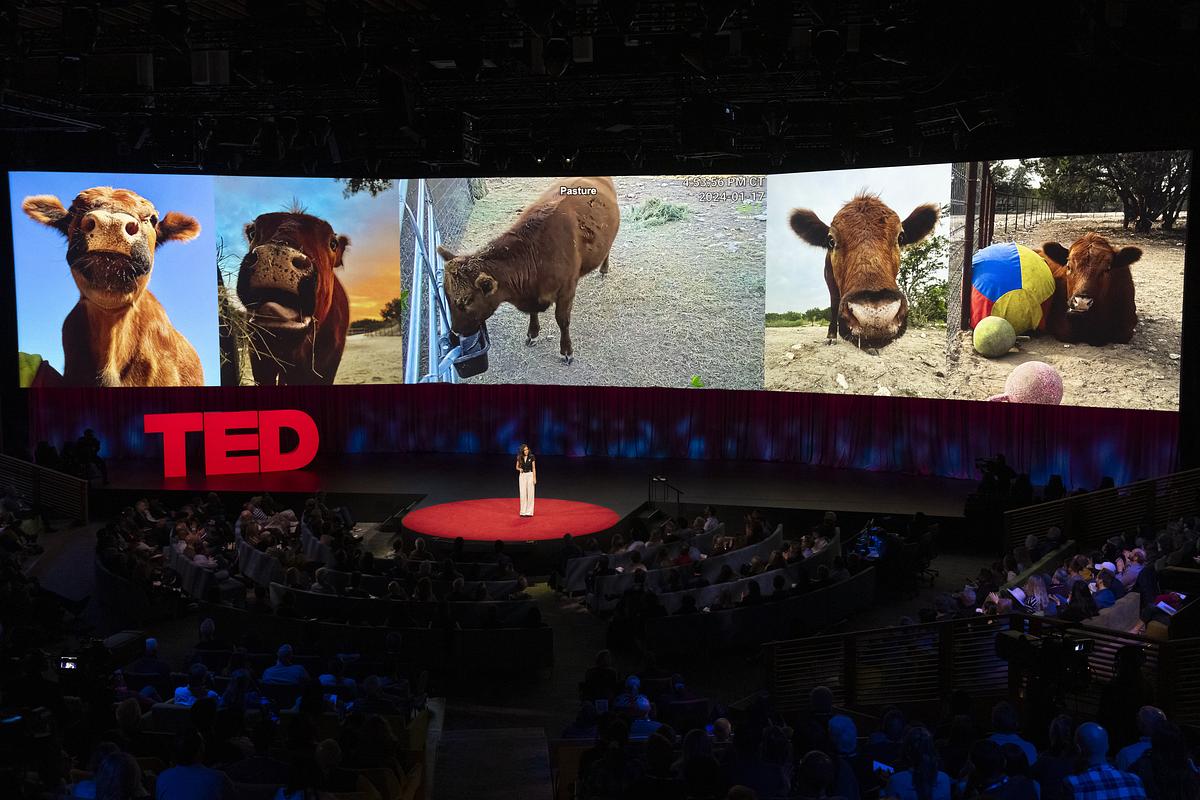
Maya Higa speaks at TED2026: All of Us on April 14, 2026, in Vancouver, BC. (Photo: Jasmina Tomic / TED)
What does the future actually look like — and who gets to build it? Day 2 of TED2026 didn’t shy away from the big questions. From the promise and peril of AI to the potential of solar-powered, offline educational tools, these sessions brought together the thinkers, builders and dreamers working at the edges of what’s possible. Think of this as your backstage pass to a day that left very little unexplored.
Day 2 included talks curated by Taiwan’s cyber ambassador Audrey Tang, social technologist Divya Siddarth, solutions journalist Angus Hervey and TED Vision Steward Sal Khan.
Watch TED2026 on TED Live, check out more photos from the event and learn more about attending a future TED conference.
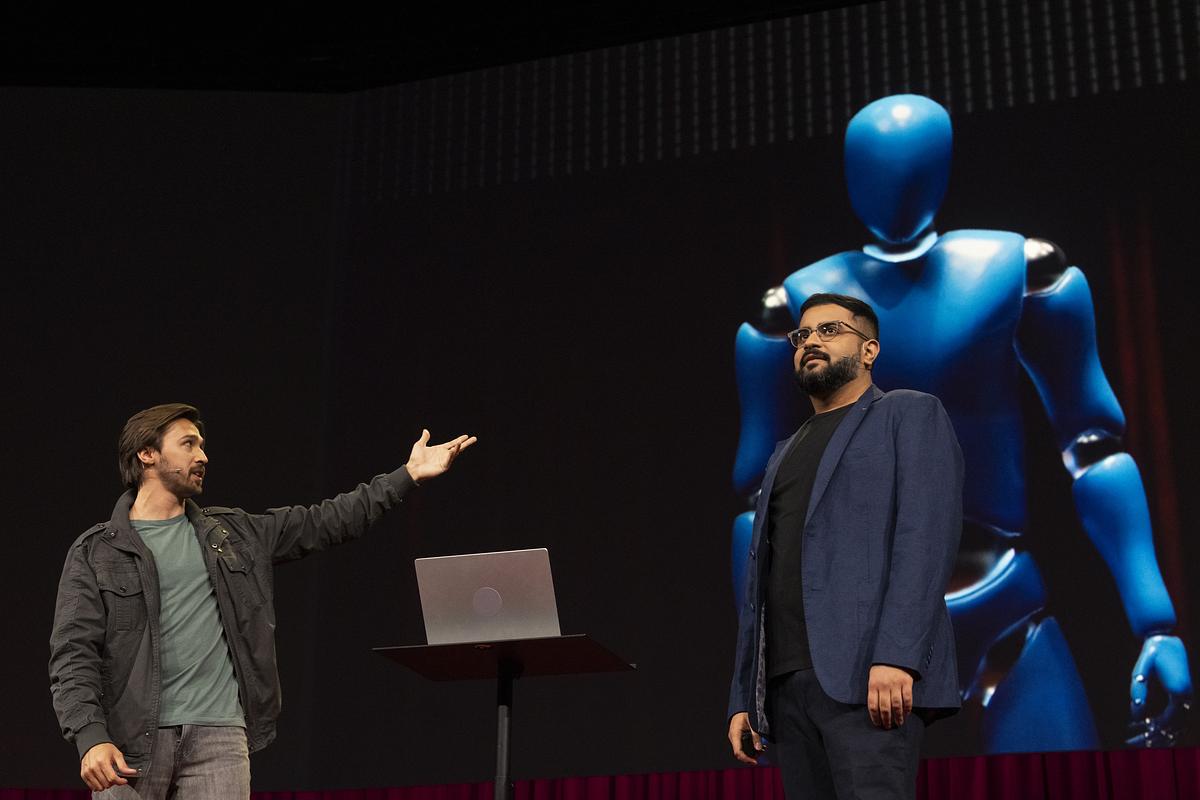
Sam Wickert and Bilawal Sidhu speak at TED2026: All of Us on April 14, 2026, in Vancouver, BC. (Photo: Jasmina Tomic / TED)
The future isn’t human vs. machine — it’s human and machine. Ethereum cofounder Vitalik Buterin built his life’s work around blockchain, creating a system designed for cooperation, not dominance. Ethereum proved that decentralized systems don’t need a single authority to thrive. Now he’s asking: What if AI worked the same way, amplifying human judgment rather than replacing it? Visual effects pioneer Sam Wickert puts that idea to the test, showcasing a live AI demo with technologist Bilawal Sidhu that gives creative control back to the filmmaker. Instead of surrendering to a text prompt, the director calls the shots — using AI like a game controller, with every pixel and angle at their fingertips. Great art has always been made by human hands, and those hands just got a remarkable new instrument.
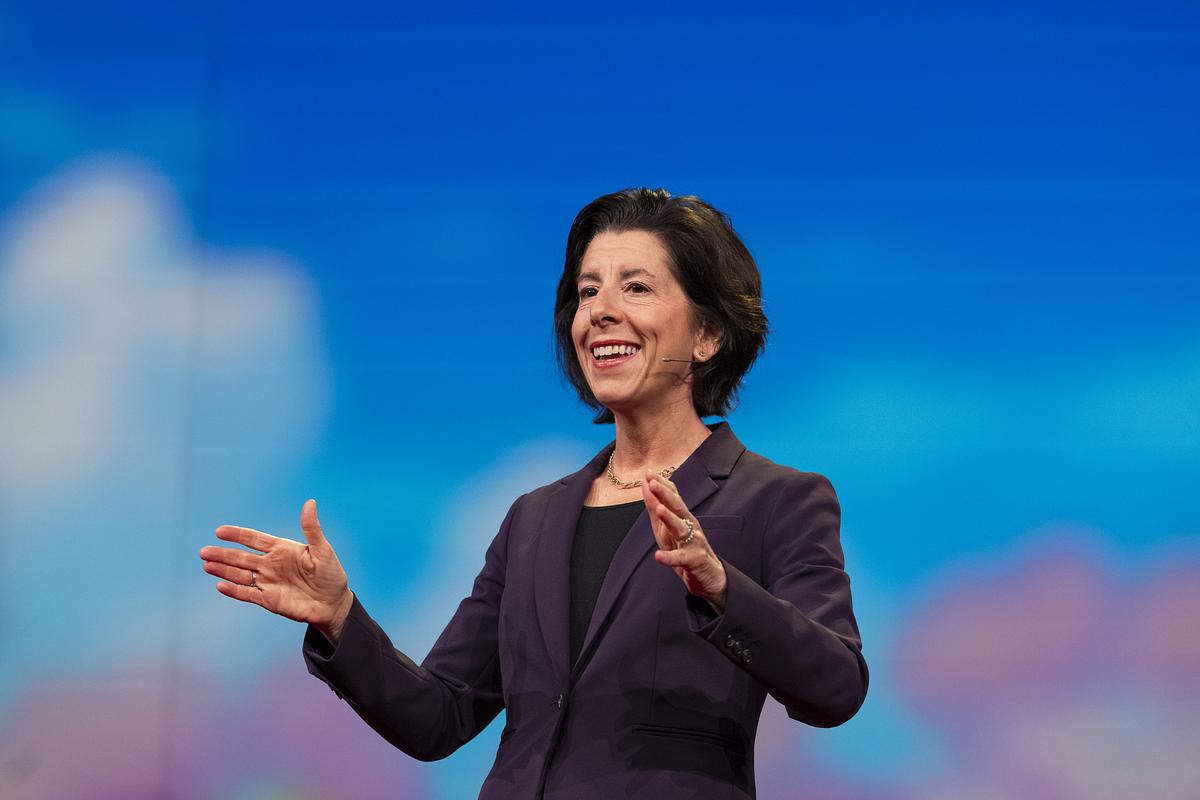
Gina Raimondo speaks at TED2026: All of Us on April 14, 2026, in Vancouver, BC. (Photo: Jasmina Tomic / TED)
We’re drowning in data, yet starving for action. Planet Labs cofounder Robbie Schingler knows this firsthand. His satellites captured the Russian military buildup along the Ukrainian border days before the invasion — and yet the war still happened. The problem was never a lack of information; it was a lack of systems built to act on it. Former Secretary of Commerce Gina Raimondo sees this same asymmetry in America’s workforce: 50 million workers could lose their jobs to AI, and yet no coordinated response exists. We have never known more about the world and yet, somehow, that still isn’t enough. Fortunately, she has a concrete plan to prepare workers for what’s coming next. “AI is a 100-year technology and needs a 100-year response,” she says.
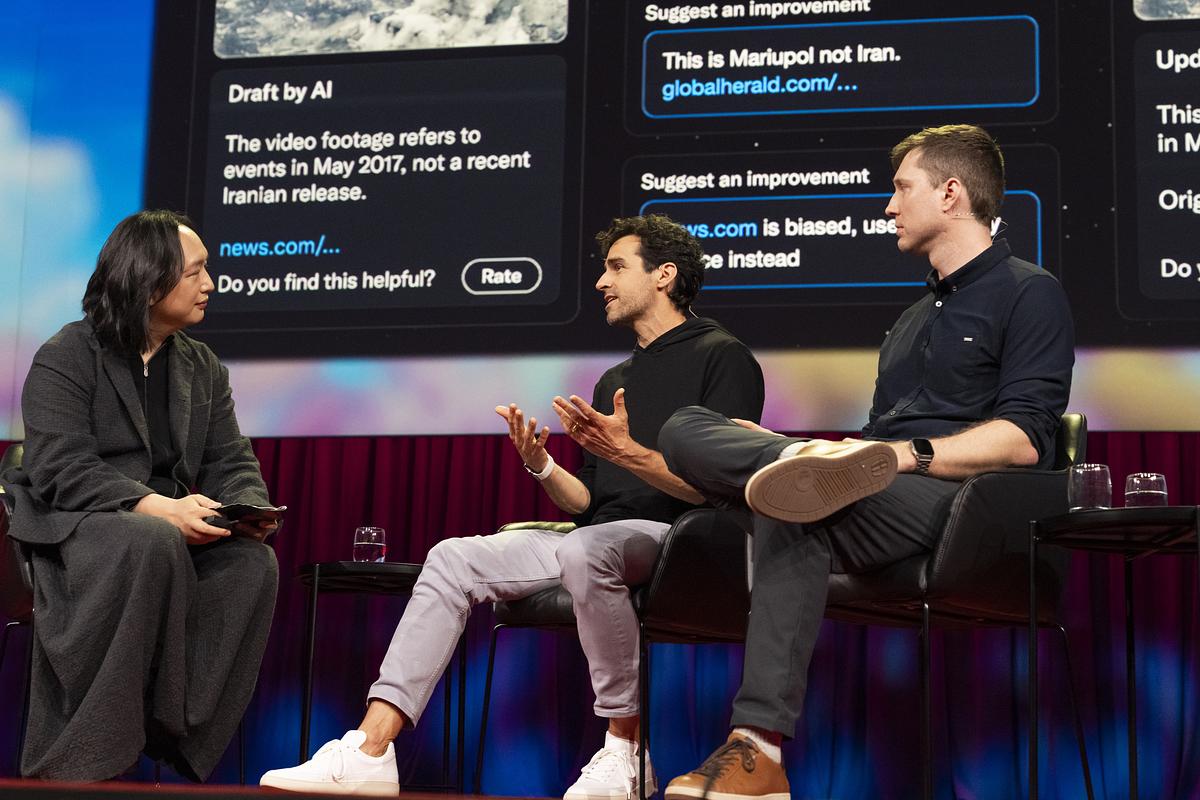
Host Audrey Tang speaks with Keith Coleman and Jay Baxter at TED2026: All of Us on April 14, 2026, in Vancouver, BC. (Photo: Jason Redmond / TED)
The power is with the people. The minds behind X’s Community Notes, Jay Baxter and Keith Coleman, dared to ask the question: What if the people got to decide what’s true? Community Notes was their answer: if people don’t trust tech companies to draw the line, let them draw it themselves. That same belief drives conservationist Maya Higa, who created an animal sanctuary that no one can visit, but everyone can participate in digitally, turning anyone with a wifi connection into a conservationist from their own home. And philosopher Carissa Véliz warns that the greatest threat to our collective agency is the power of prediction — algorithms issuing verdicts about who we are before we’ve had a chance to prove otherwise. But predictions only gain their power when people believe them, she says. So don’t. Resist, participate and remind the algorithms who’s really in charge.
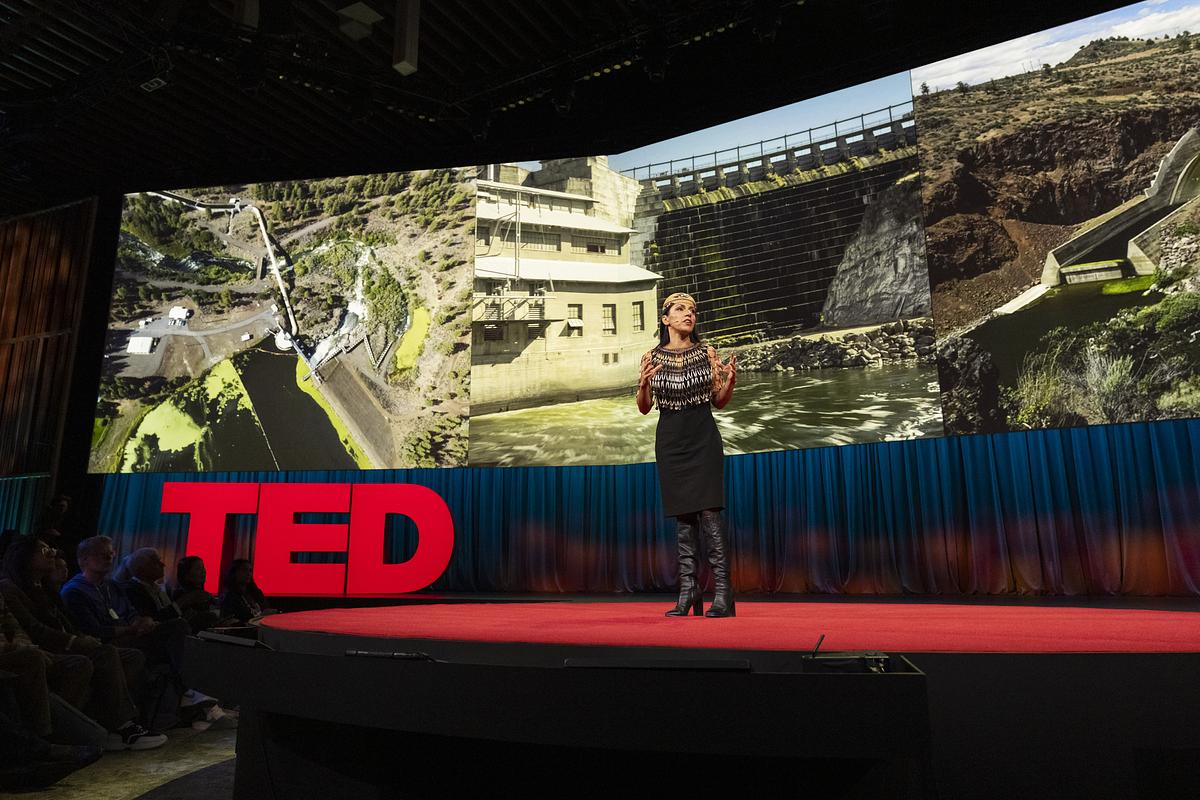
Amy Bowers Cordalis speaks at TED2026: All of Us on April 14, 2026, in Vancouver, BC. (Photo: Ryan Lash / TED)
Nature has always known how to heal itself. Indigenous advocate and attorney Amy Cordalis Bowers shares how the Yurok people fought back against generations of colonization and extraction to achieve the largest dam removal in US history. The Klamath River’s remarkable recovery reveals what’s possible when we follow nature’s oldest instructions. Author, educator and activist Bill McKibben picks up that thread with an unlikely source of optimism: the solar revolution isn’t coming — it’s already here. After 400,000 years of burning things for energy, the only thing standing between us and a clean, abundant future is the political will of those still protecting fossil fuel profits.
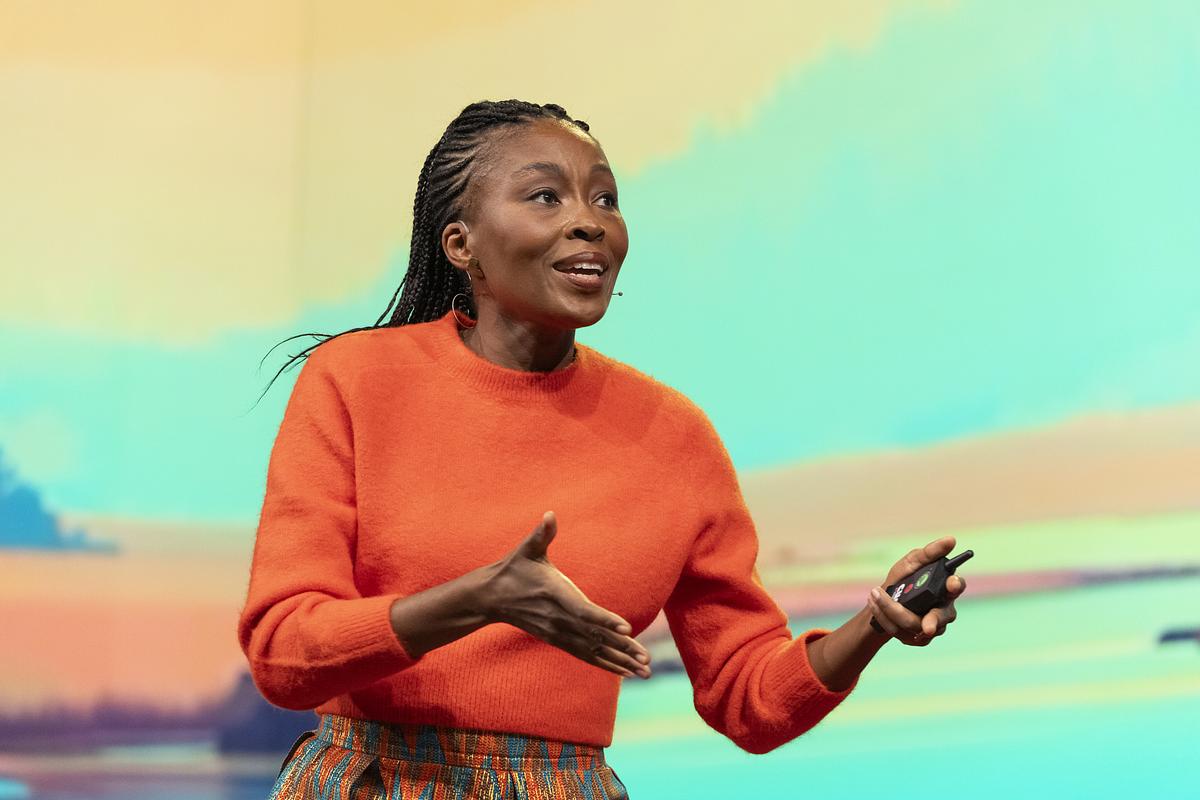
Rapelang Rabana speaks at TED2026: All of Us on April 14, 2026, in Vancouver, BC. (Photo: Ryan Lash / TED)
Some of the world’s most solvable problems aren’t being talked about enough. Across Sub-Saharan Africa, millions of children show up to school eager to learn — and leave without ever learning to read. Audacious Project grantee and entrepreneur Rapelang Rabana makes a case for scrapping the Western playbook and introducing a surprising fix: solar-charged, offline tablets that adapt in real time to each child’s level and pace, in their own language. Fellow Audacious Project grantee Drew McCartor points to an even quieter crisis: every day, lead poisoning accounts for an estimated two million IQ points permanently lost in children, one of the most overlooked catastrophes of our time. With a proven three-step model to measure, identify and remove lead, his nonprofit Pure Earth is scaling across more than 20 countries to protect half a billion children.
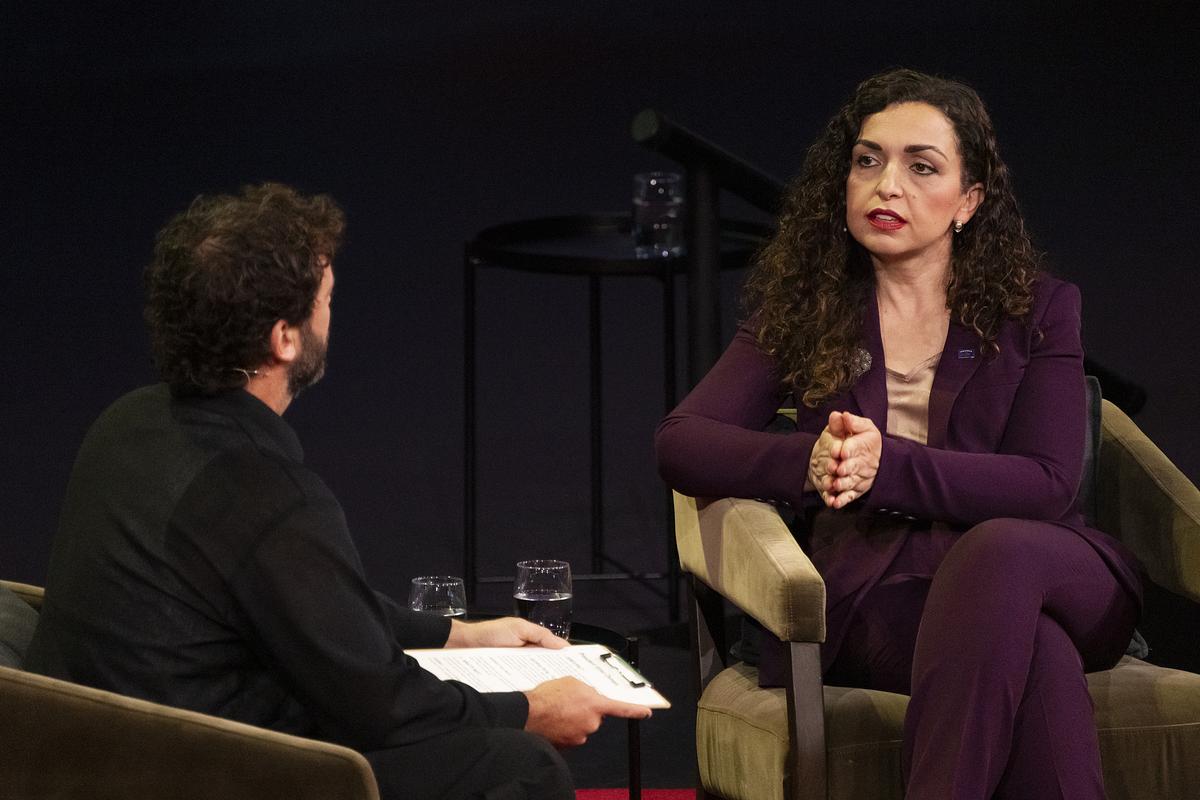
Host Angus Hervey sits down with former Kosovo President Vjosa Osmani-Sadriu at TED2026: All of Us on April 14, 2026, in Vancouver, BC. (Photo: Jasmina Tomic / TED)
The key to freedom is telling your story. Former Kosovan president Vjosa Osmani-Sadriu says that in a world where democracy is losing ground to populism and cynicism, the most powerful thing a small nation can do is refuse to stay silent. In conversation with solutions journalist Angus Hervey, she explains that it’s not military or economic might that defines a country’s strength but rather the courage to use its own voice. Venezuelan opposition leader and freedom fighter Leopoldo López takes that argument into the digital age, showing how open-source technology (like decentralized communication, Bitcoin and AI) is becoming the new frontier of that same fight. His warning: “Whenever there is a gatekeeper, there is conditional freedom. And conditional freedom is not freedom.”
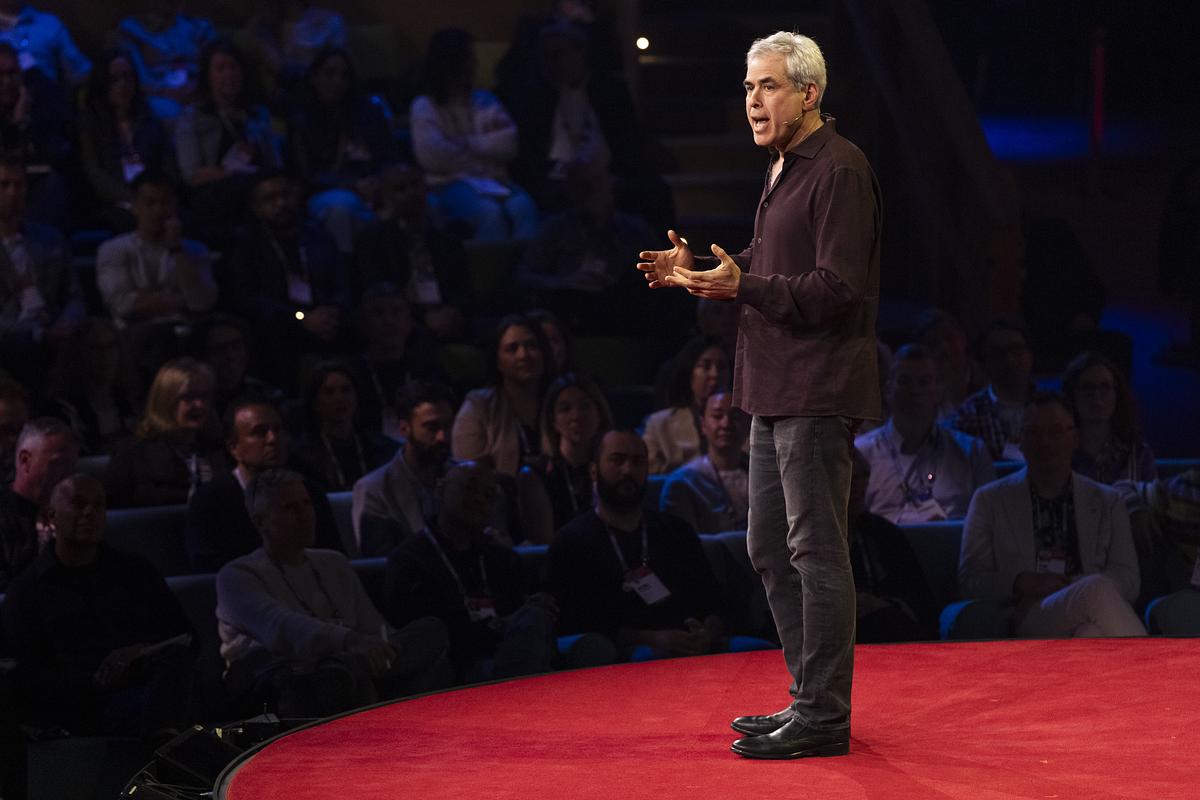
Jonathan Haidt speaks at TED2026: All of Us on April 14, in Vancouver, BC. (Photo: Jason Redmond / TED)
It’s time to put the genie back into the bottle. We’re ultrasocial creatures: we need community, connection and common goals in order to thrive. Unfortunately, says author Jonathan Haidt, technology is hollowing out the very conditions that make this thriving possible. He gives a damning account of how social media, ed-tech and AI block us from flourishing — and why our children are paying the steepest price. The good news is that people are finally standing up to change things: phones are coming out of schools, social media age limits are rising and companies are being held liable for harms they knowingly caused. The task now, he says, is to apply that same hard-won skepticism to AI before it goes further down the same road — not by rejecting technology, but by demanding proof that it’s safe before we hand it to our kids.
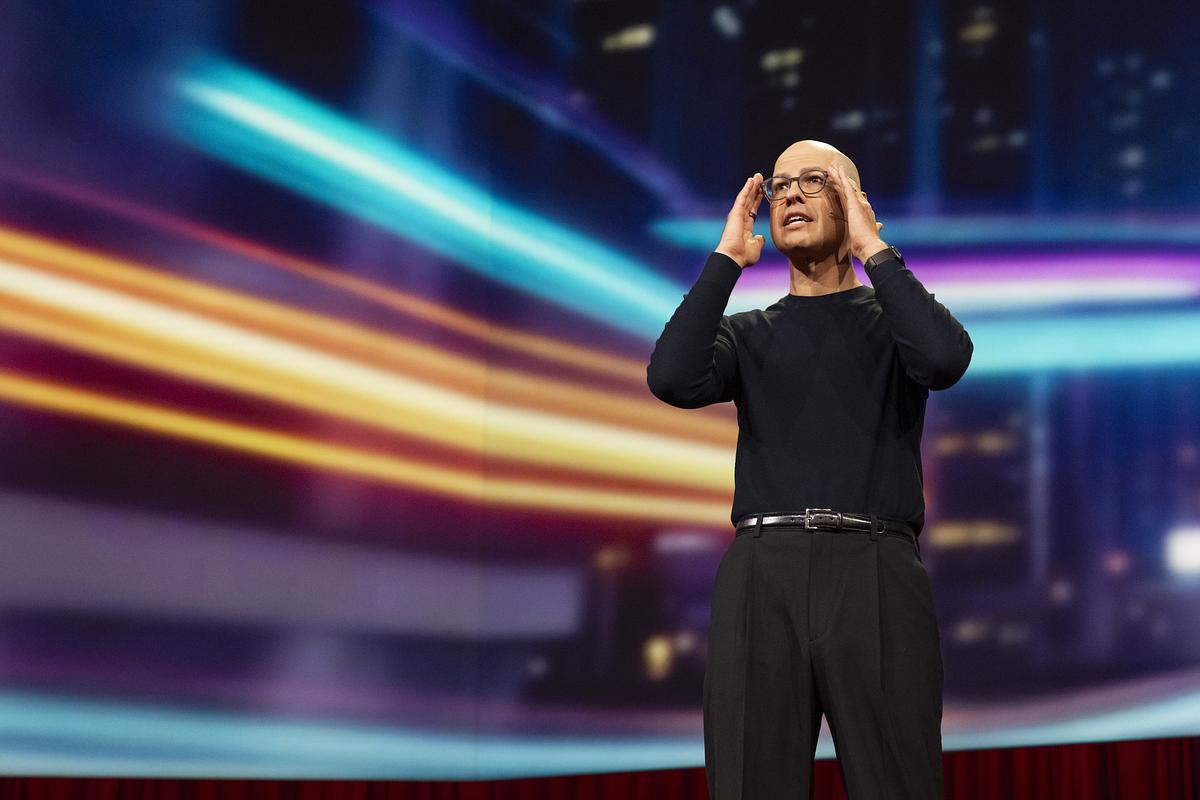
D. Scott Phoenix speaks at TED2026: All of Us on April 14, 2026, in Vancouver, BC. (Photo: Jason Redmond / TED)
The merger of humans and AI. Two billion years ago, a dying world was saved by two cells merging — an accident that gave rise to complex life on Earth. Tech entrepreneur D. Scott Phoenix says AI is our generation’s version of that moment, with the stage set for a merger between humans and the technology. “If we stay separate, AI is not a tool. It’s a replacement: one that gets better and cheaper every week,” he says. The boundary is already starting to dissolve; we just need to make sure humanity itself doesn’t fracture first. Phoenix’s talk is followed by two interviews, beginning with co-CEO of Waymo Tekedra Mawakana in conversation with TED Vision Steward Sal Khan. Mawakana discusses the state of her company’s autonomous driving technology, the staggering amount of rides they deliver per week and how autonomous vehicles could solve the problem of road safety. Next up is entrepreneur and philanthropist Reed Hastings, who discusses his journey from cofounding Netflix to being appointed to the board of Anthropic in 2025, where he’s working to accelerate possibilities in education with the use of AI.
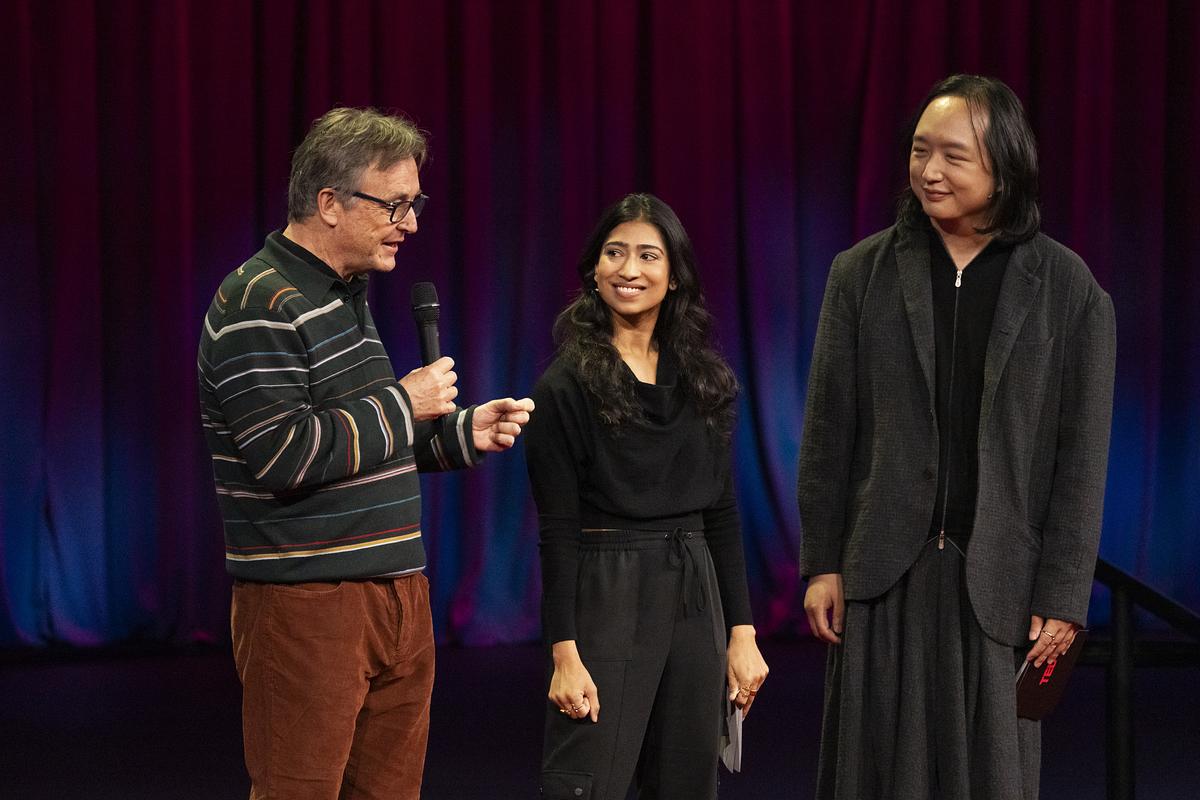
Hosts Chris Anderson, Divya Siddarth and Audrey Tang speak at TED2026: All of Us on April 14, 2026, in Vancouver, BC. (Photo: Jason Redmond / TED)
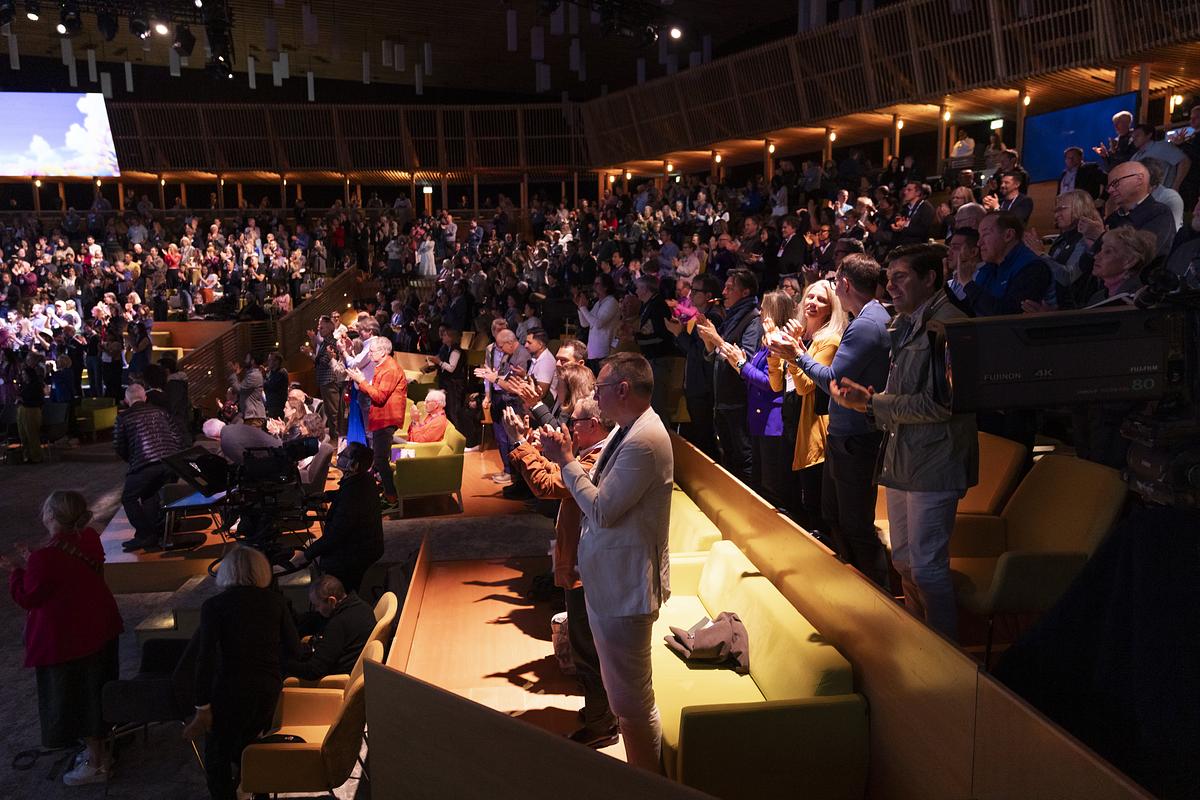
A standing ovation from the audience at TED2026: All of Us on April 14, 2026, in Vancouver, BC. (Photo: Jason Redmond / TED)
Watch TED2026 on TED Live, check out more photos from the event and learn more about attending a future TED conference.