TED Blog

Main

03 May 2010

Social experiments to fight poverty: Esther Duflo on TED.com

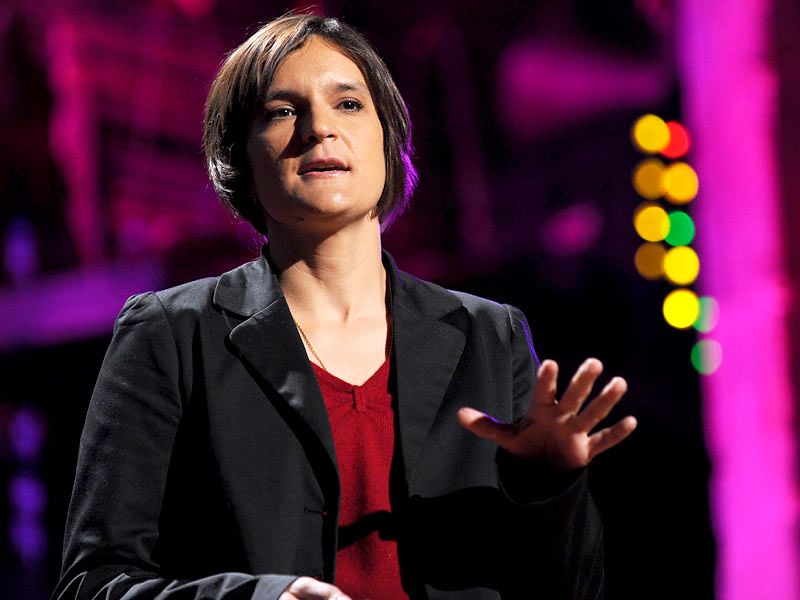
Alleviating poverty is more guesswork than science, and lack of data on aid’s impact raises questions about how to provide it. But Clark Medal-winner Esther Duflo says it’s possible to know which development efforts help and which hurt — by testing solutions with randomized trials. (Recorded at TED2010, February 2010 in Long Beach, CA. Duration: 16:47)

Watch Esther Duflo’s talk on TED.com, where you can download this TEDTalk, rate it, comment on it and find other talks and performances from our archive of 600+ TEDTalks.

Bookmark and Share
  • helen hill

    May 3 2010

    Good day!!!! Nice Video…more powers and God bless….

  • Front frontsplits101

    May 4 2010

    It a very good video to help educate us how to spent money and how some people are just waiting for aid?

    Thanks

  • clark anderson

    May 4 2010

    Alleviating poverty is more guesswork than science, and lack of data on aid’s impact raises questions about how to provide it. But Clark Medal-winner (ccna questions)

  • John Denner

    May 4 2010

    Always enjoy these videos !

  • hari das

    May 6 2010

    I LIKE THIS SPEECH VERY MUCH….
    FIRST OF ALL I WOULD LIKE TO SAY ABOUT POVERTY…I THINK………
    THIS IS NOTHING BUT WITHOUT THE REQUIREMENTS OF BASIC HUMAN NEEDS SUCH AS WITHOUT THE FOOD,CLOTHES AND SHELTER…

    POVERTY ALSO REFERS TO THE PEOPLE WITHOUT THE PROPER EDUCATION AND GETS AFFECTED TO THE DISEASE EASILY…
    THIS IS ONE OF MAJOR DISASTER THAT IS HAPPENING IN OUR WORLD.

    DUE TO THE LACK OF BASIC REQUIREMENTS THEY ARE HAVING THE POSSIBILITY OF
    GETTING AFFECTED BY THE MAJOR DISEASES LIKE MALARIA,CHOLERA,ETC….

    THEY ARE NOT HAVING THE PROPER AIDING FACILITIES.
    NOW IMMUNIZING VACCINES ARE AVAILABLE IN A VERY CHEAP WAY.BUT THEY ARE NOT EFFECTIVE NOWADAYS.THEY ARE ADULTERATED FOR MAKING MONEY.

    I WOULD LIKE TO SAY MY WORD THAT “PROPER AIDING MAY CURE THE POVERTY”.
    BECAUSE YOU HAVE SAID THAT ONLY ONE PERCENTAGE OF THE CHILDREN WERE FULLY IMMUNIZED AND THE REMAINING GETS AFFECTED.
    ACCORDING TO MY POINT OF VIEW, THIS MAY CREATE THE
    “GREATER CHANGE”IN OUR WORLD……..

  • sudha geetha

    May 6 2010

    it is really a great talk.Only when we start to help others we can remove poverty.nowadays the technology is very developed. so we need money to live in this world easily.in the world one side the most of the people are millioners who live in a very luxury life . they spend a lot of money even a small function.and they waste a lot of food. but in the other side of the world, people don’t get any food. the children don’t get even a cup of food. In Somalia,the poverty kill so many people.Most of the Politicians cheat people and they are doing more corruption in people.and they save the black money in the Swiz bank. when we get all the money in the Swiz bank,that day only we can decrease the poor people count.lastly i tell that “PUT YOURSELF IN OTHERS SHOES”. when the people can understand others feelings then they won’t fight with each other.”GIVE A FISH, HE CAN EAT FOR A MEAL,BUT TEACH TO CATCH A FISH, HE CAN EAT FOR HIS WHOLE LIFE”. I think Awareness can reduce poverty.

  • Anna Vargas

    May 7 2010

    Poverty: We Can’t Eradicate It, But We Can Reduce It!

    Anna

  • pradeep ccet

    May 10 2010

    It is interesting talk . poverty is one of the major social problem for a country . it will affect country’s development.it cannot be eleminate suddenly ,it can eleminate by slow process.
    I think education is one of the factor to reduce the poverty because if one person in family is educated he can have knowledege to work, and he can manage his family .
    but the poor people will not able to send his children to school because the student has to pay money for their shoes,books ,notes ,uniforms , school fee,etc..so the rich persons or government can help those childrens.though thre are some organisations are to hlep these students
    you said that in hittie 200000 peoples are died due to earthquake and they are all los their shelter and wealth and they become poor.They want to help by wealthy countries and people .there are some people which they donot have clean houses and which cause birth to mosquitoes and it cause disease ot them ,as a result they are died.so let us help those people

  • AZARUDEEN .J

    May 10 2010

    It is a very nice talk.In this talk you told that about the people who are under the line of poverty and their sickness……
    poverty refers to the meaning that the people who are not having the proper requirements………

    Main thing is the shortage of food,clothes and shelter and it also adds the Water as the major role in the life of the poor people…….
    Its really a horrible happening existing in this World……..One of the main reason for the poverty is due to being an illiterate…..
    Lack of education is due to the lack of money and also the other requirements..This may lead a person to critical situations.This is becoming a social issue in this existing World….

    We want to fight against this poverty.To overcome this issue people want to unite together and fight for the poverty to get rid off it.If this happens,our world become a Heaven and thereafter no other person dies in search of food and there’s not at all a term called poverty….
    I would like to help those people..

  • Pingback: Making Daily Reading Time Possible « shiyan

  • Pingback: Even Bates Clark Medal winners make economic errors | Canadian Agri Food

  • Pingback: Ti chiedi se la tua donazione serve? « Sperimentare il Fundraising

  • Pingback: Tim Harford: Trial, error and the God complex | virtual economics

  • Pingback: There’s a lot of talk on r/economics about how economics has no scientific basis. I just want to make the point that it’s not universally true. So, here’s Esther Duflo of MIT, winner of the MacArthur genius grant and the John Bates Clark

  • Pingback: Economics | Principled Design


Read the TED Prize Blog at TEDPrize.org
Read the TED Fellows Blog
Read the TEDx Blog

Find stories on the TED Blog about:

TED on Facebook

Become a Fan of TED
on Facebook


@TEDTalks on Twitter

Follow TED on Twitter:
@TEDNews | @TEDTalks


RSS

Subscribe to TED RSS feeds:
TED Blog | More RSS Options


Subscribe to TED's weekly newsletter


See 1,000+ TEDTalks in a spreadsheet:


http://tedconfblog.files.wordpress.com/2010/07/spreadsheetscreen.jpg

Spot a glitch on TED? Report a bug


TED takeaway


TED ringtones:
TEDTalks Classic tune in [mp3] [m4r]
TEDTalks Phase II tune in [mp3] [m4r]

TED Bloggers

Chris Anderson | Curator
June Cohen | Executive Producer of TED Media
Emily McManus | Editor, TED.com
Matthew Trost | Assistant Editor, TED.com
Jenny Zurawell | Translation Specialist, TED.com
Bruno Giussani | TED European Director
Jason Wishnow | Director, Film + Video
Jim Daly | Editor, TED Books
Jane Wulf | TED Scribe
Guestblogger: Ben Lillie | Curator, the Story Collider
Guestblogger: Karen Eng | Youth editor, TUNZA
Guestblogger: James Duncan Davidson | Photographer
Guestblogger: Rachel Tobias | never-have-i-ever.tumblr.com

Blogs we watch

+ TEDPrize.org
+ TED Fellows blog
+ TEDx Blog
+ tedquotes.tumblr.com
+ Thomas Dolby | TED Musical Director, blogging at ThomasDolby.com
+ The indispensable Global Voices

This work is licensed under a Creative Commons license.

Powered by WordPress.com VIP