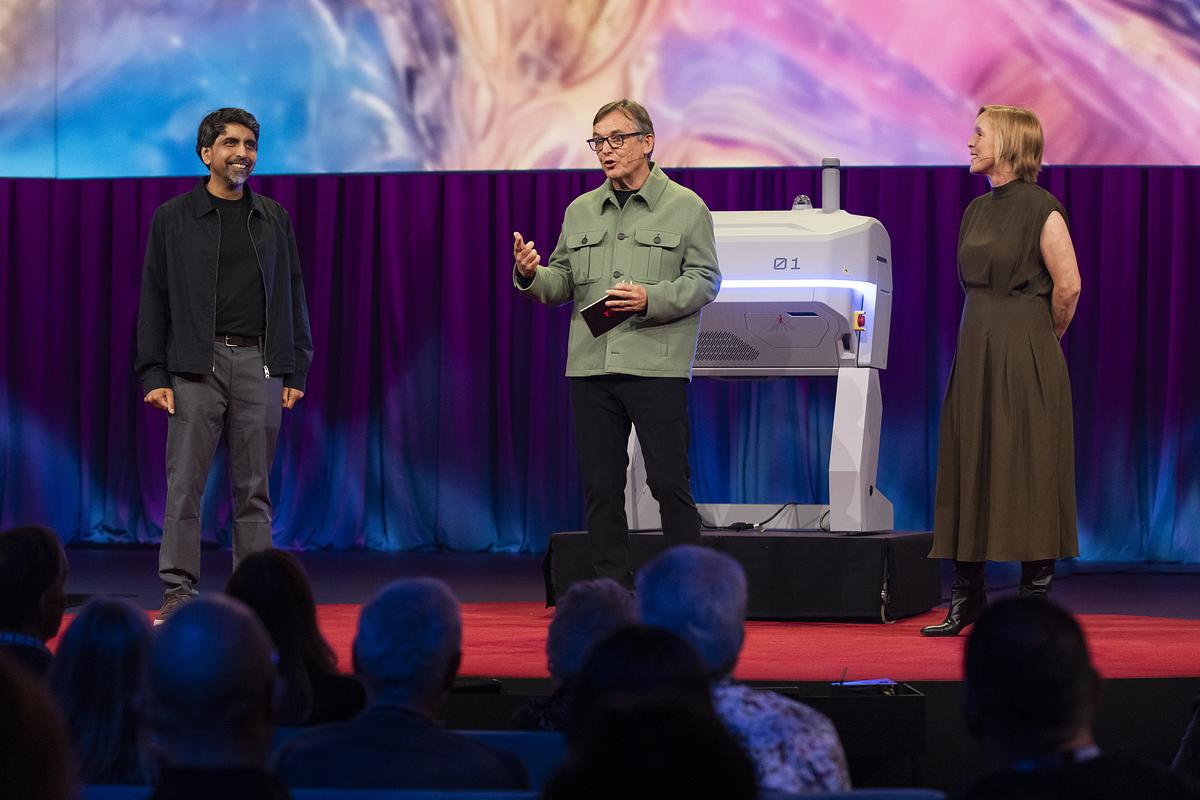
TED’s Sal Khan, Chris Anderson and Helen Walters host Session 1 of TED2026: All of Us on April 13, 2026, in Vancouver, BC. (Photo: Ryan Lash / TED)
It’s time for TED!
TED2026 marks a pivotal milestone: our final conference in our beloved Vancouver venue before embarking on TED’s next chapter. To open the conference, TED’s Chris Anderson and Helen Walters welcome TED Vision Steward Sal Khan onto the stage for an eclectic session. Seven speakers explore how to thrive in the wild, wonderful and sometimes terrifying future we’re all facing together … before the session wraps up with a bang.
Watch TED2026 on TED Live, check out more photos from the event and learn more about attending a future TED conference.
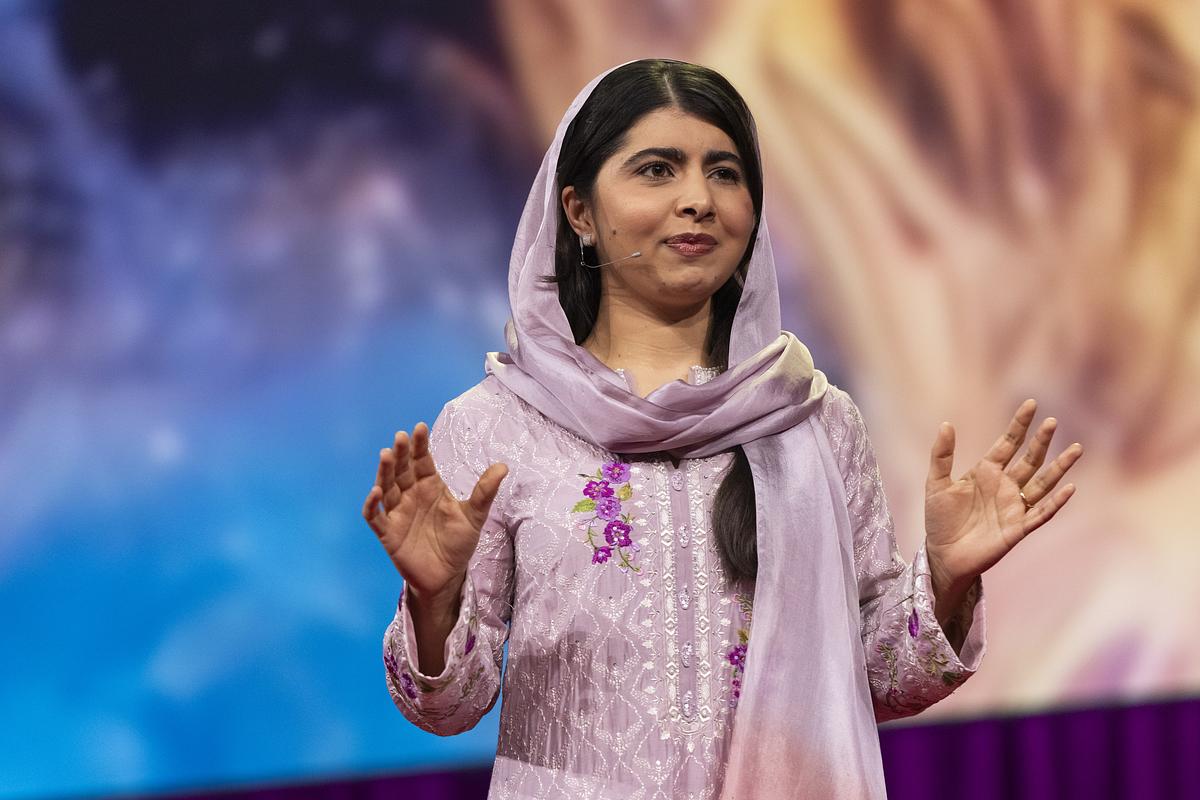
Malala Yousafzai speaks at TED2026: All of Us on April 13, 2026, in Vancouver, BC. (Photo: Ryan Lash / TED)
Progress stalls. Hope doesn’t have to. Malala Yousafzai is the youngest Nobel laureate in history, so you might think she’s got social change figured out. But here’s the truth: “I don’t have all the answers,” she says. In a moving talk, she tells the story of her advocacy for girls’ education — from surviving an assassination attempt and meeting with world leaders to watching hard-won progress collapse when Afghanistan fell to the Taliban in 2021 — and talks about how to keep working for the future you want, even when hope feels lost. “If we start with something, work together and stay ambitious, hope stops being a thing we wait to feel and becomes something we create,” she says.
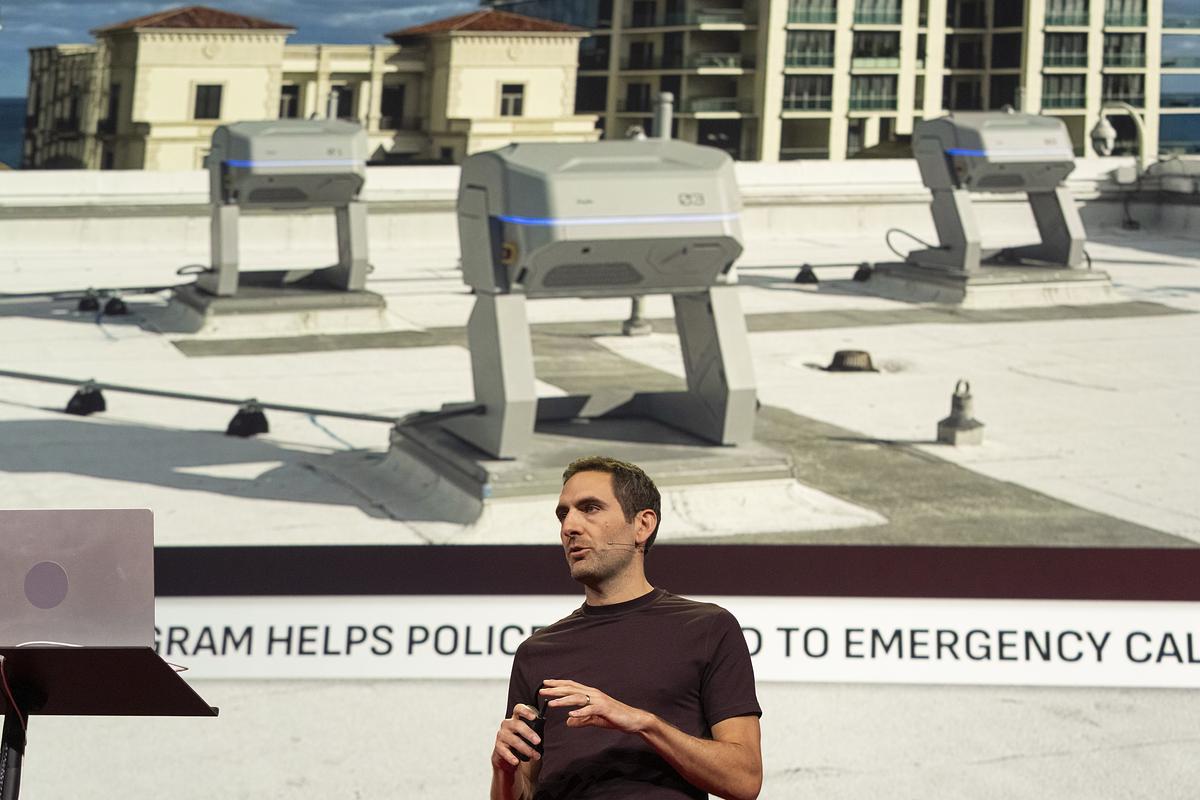
Adam Bry speaks at TED2026: All of Us on April 13, 2026, in Vancouver, BC. (Photo: Ryan Lash / TED)
The next great infrastructure? Drones. Drone executive Adam Bry is helping to build the future of autonomous flight. He makes the case that self-flying drones are already transforming everything from emergency responses to public safety — preventing wildfires, mapping power grids and catching crime, all in real time. In a live demo, he launches a drone in Tokyo while piloting it from across the Pacific in Vancouver. For Bry, the future is one where flying robots work seamlessly in the background, as essential to daily life as roads and power lines.
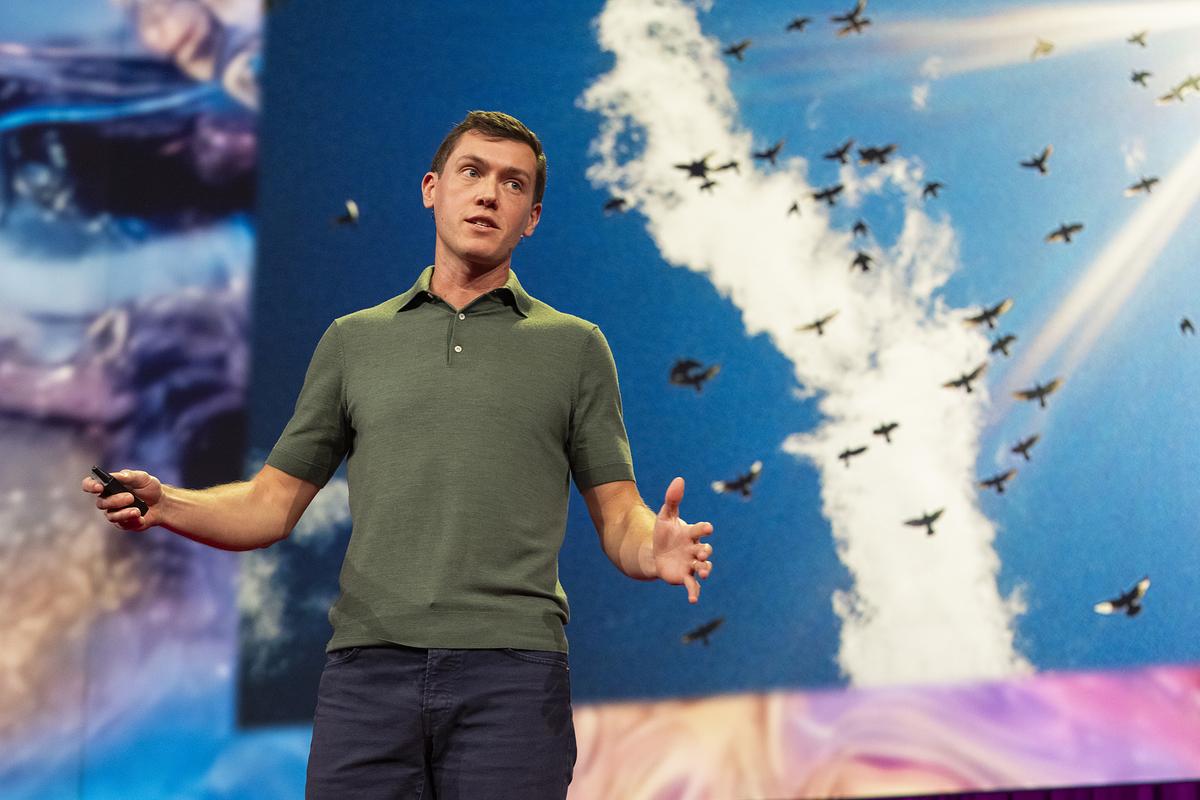
Garrett Langley speaks at TED2026: All of Us on April 13, 2026, in Vancouver, BC. (Photo: Ryan Lash / TED)
A technology platform for public safety. Garrett Langley built Flock Safety after watching crime rise in his own Atlanta neighborhood. Today, the network of license plate readers, cameras and drones helps solve more than a million crimes a year. He says the old model of policing — officers driving around looking for “suspicious activity” — was slow and riddled with bias, while data-driven technology can get to the truth faster. He takes the hardest questions head-on — about constitutionality, privacy guardrails and the state of mass surveillance — and asks if the US can build an infrastructure that makes crime simply unsustainable.
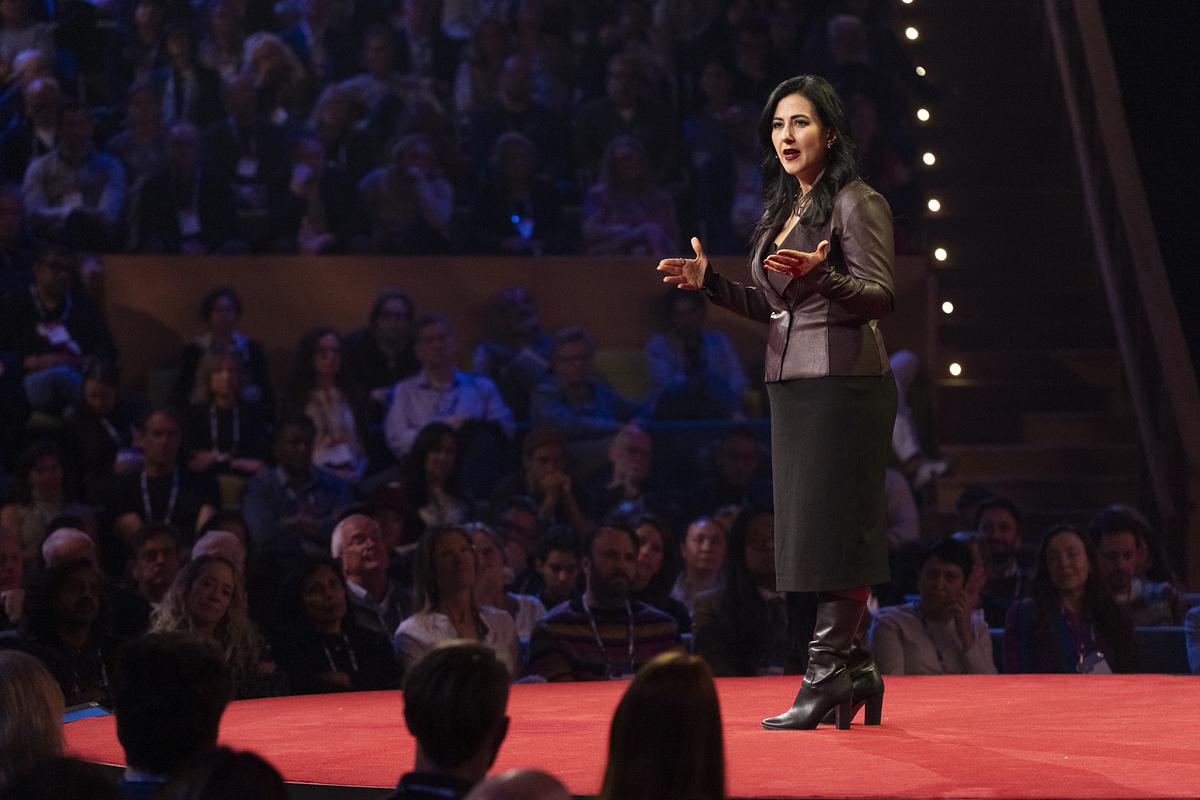
Hiba Qasas speaks at TED2026: All of Us on April 13, 2026, in Vancouver, BC. (Photo: Ryan Lash / TED)
Peace is possible, but it has to start with more than empathy. After four decades spent living and working inside conflict zones, mediator Hiba Qasas shows how the traditional peacebuilding playbook mistakes process for progress, overlooking the real drivers of lasting peace: power, incentives and legitimacy. She introduces her framework, STIR, which flips the script by leading with principled pragmatism — or “self-interest with a spine” — an approach that has brought hundreds of Israeli and Palestinian leaders into an active coalition, working together even in the midst of war.
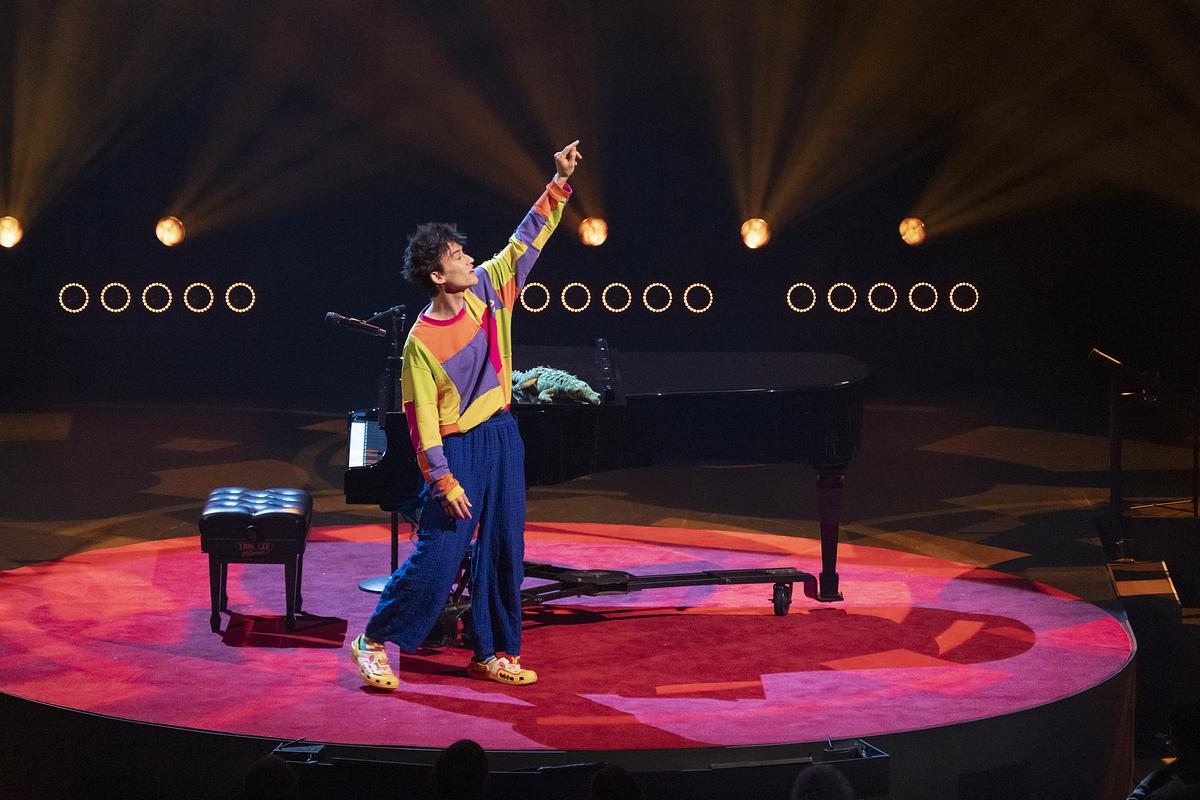
Jacob Collier speaks at TED2026: All of Us on April 13, 2026, in Vancouver, BC. (Photo: Jason Redmond / TED)
Music is a language we intuitively know. In a breathtaking performance, kaleidoscopic music maker Jacob Collier explores what he calls “the wiggle”: the fluid, supple energy that weaves melody, rhythm and harmony into a story. Professing his love for harmony — “the wiggle between the wiggles” — he reveals its power to shift the entire color of a song. There are no straight lines in nature, and there are none in music either. The wiggle is what makes it such a wonderful world.
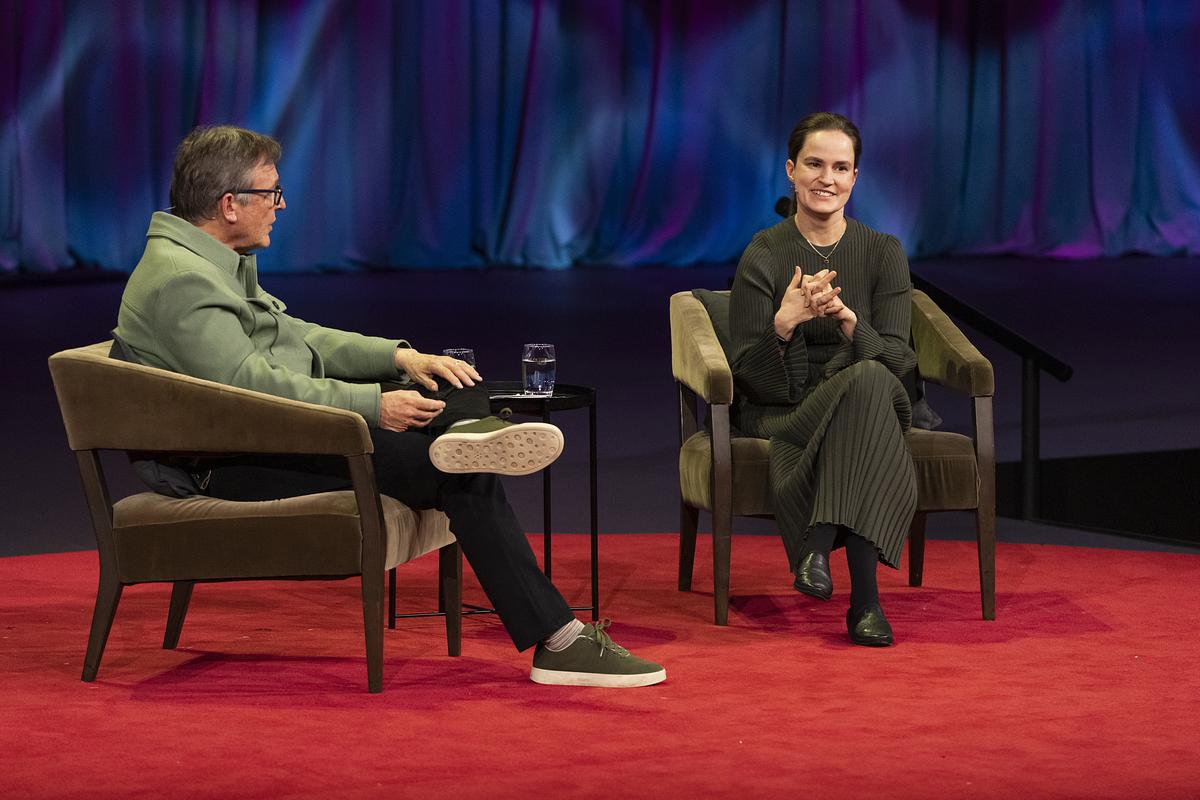
Silvana Konermann (right) in conversation with TED’s Chris Anderson speaks at TED2026: All of Us on April 13, 2026, in Vancouver, BC. (Photo: Ryan Lash / TED)
The virtual cell is almost here. Complex diseases like Alzheimer’s have stumped medicine for decades, because each patient’s biology is uniquely tangled. But scientist and 2025 Audacious Project grantee Silvana Konermann thinks artificial intelligence holds the key to finally untangling it. Her team at Arc Institute is harnessing single-cell sequencing, CRISPR and AI to run a billion high-quality cellular experiments, training a model that can “speak” the language of cells, the way LLMs learned to speak ours. The goal: a universal virtual cell that tells researchers exactly which interventions could turn a diseased cell back into a healthy one, transforming a century of guess-and-check medicine into something more like a cheat code.
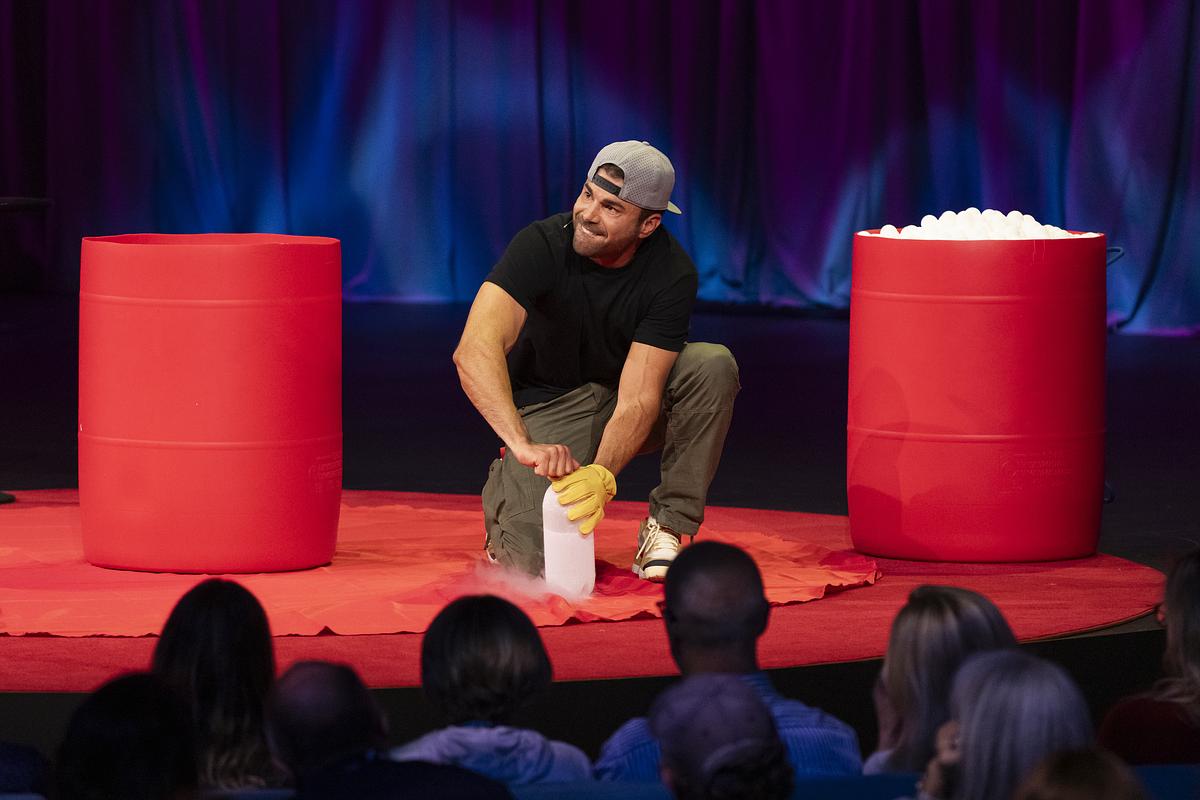
Mark Rober preps a liquid-nitrogen-powered blast at TED2026: All of Us on April 13, 2026, in Vancouver, BC. (Photo: Ryan Lash / TED)
Warning: this talk begins with an explosion. Science educator Mark Rober has spent years cracking the code on how to teach a generation raised on YouTube. If you can get their attention — like building the tallest elephant toothpaste fountain in history to teach the science of catalytic reactions — then suddenly you have somewhere to attach the learning. He calls it “hiding the vegetables.” Now he’s channeling this method into a full science curriculum for teachers everywhere that’s free, forever. Teachers have the most important job on the planet, he says: it’s time they had the tools to match.
Watch TED2026 on TED Live, check out more photos from the event and learn more about attending a future TED conference.