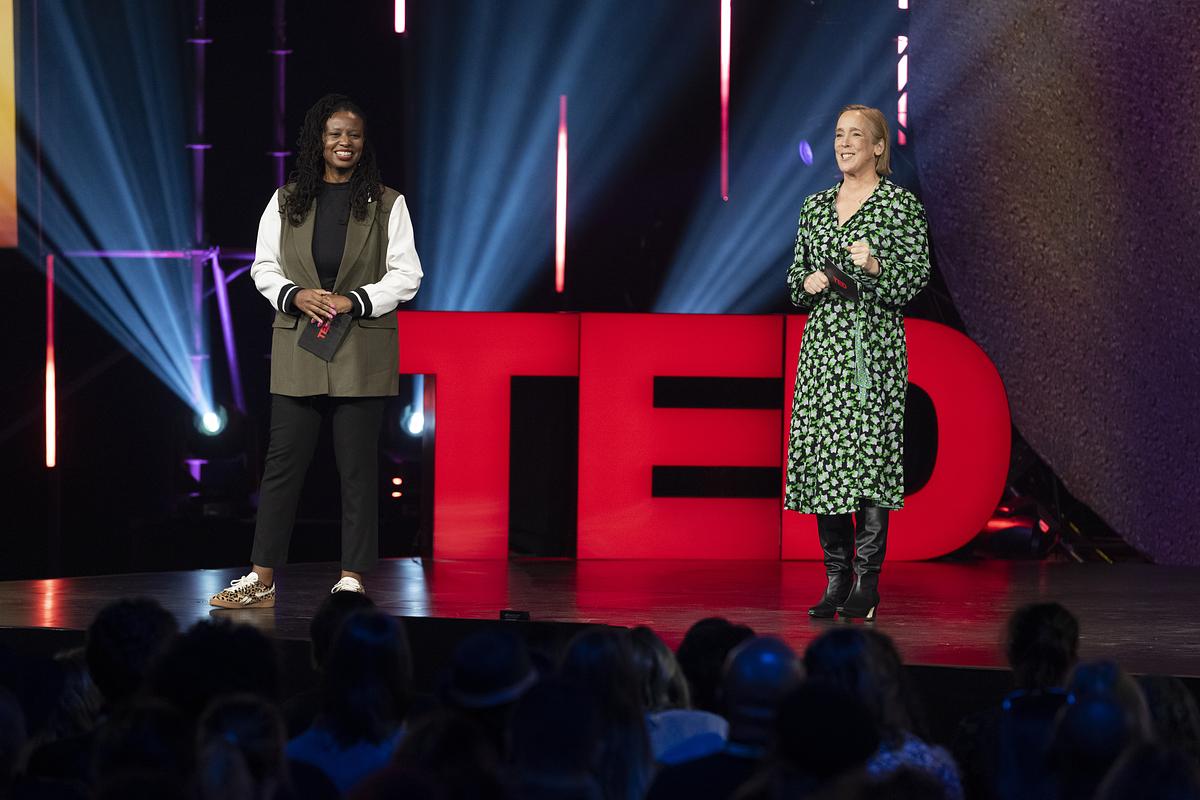
TED’s Monique Ruff-Bell (left) and Helen Walters (right) host Session 5 of TEDNext on November 11, 2025, in Atlanta, GA. (Photo: Ryan Lash / TED)
For day 3 of TEDNext 2025, two magical sessions of talks put forward ideas on how to grow thoughtfully, think radically and redesign a better world. With stories from our AI-powered present (and future) as well as a healthy dose of ingenious human problem-solving, the talks of day 3 surprised, delighted and shed new light on what it means to be human right now.
What exactly is TEDNext? A vibrant, three-day exploration of what’s next, propelling the “future you” to think expansively at every level, from personal to global. The second-ever TEDNext conference, held in Atlanta, continues an expansion of the annual slate of conferences from TED, with a conference designed to spark imagination, embrace possibility and foster dreams about what the next version of “you” can be.
Watch TEDNext 2025 on TED Live, check out more photos from the event and learn more about attending a future TED conference.
Some key takeaways from day 3:
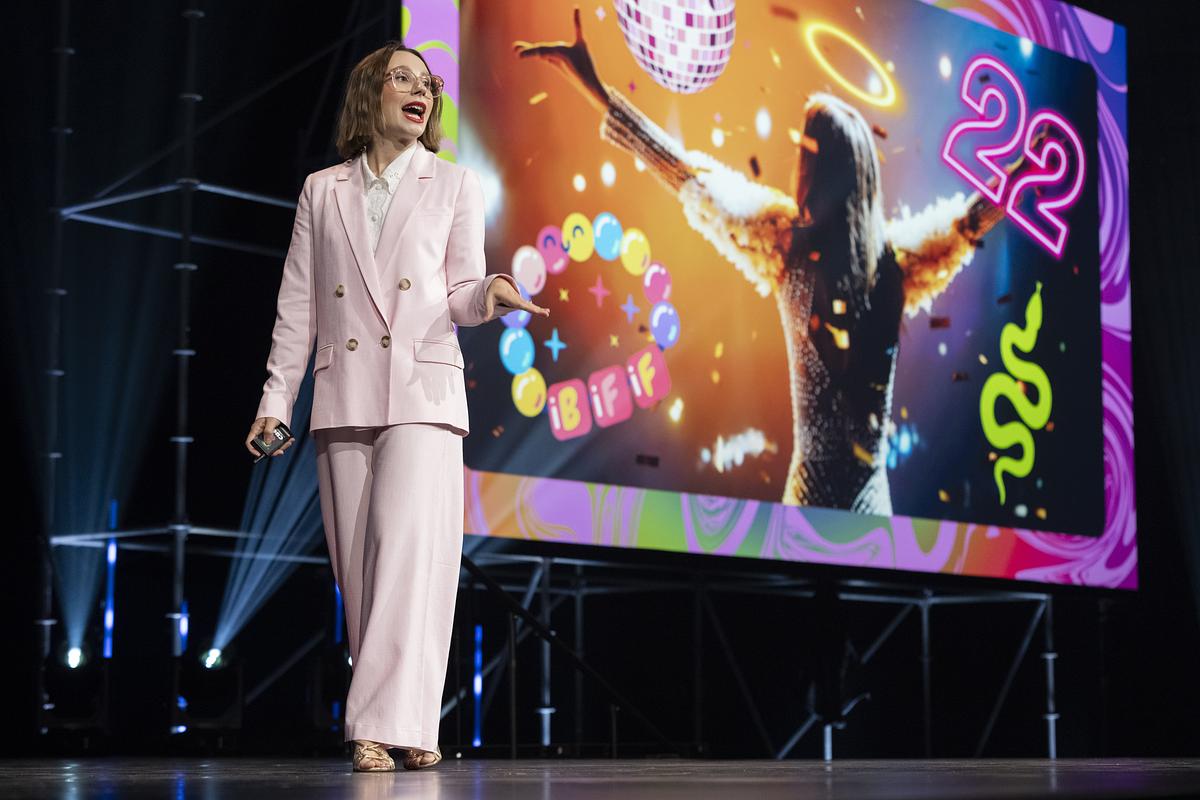
Amanda Montell speaks at TEDNext on November 11, 2025, in Atlanta, GA. (Photo: Ryan Lash / TED)
The line between awe and indoctrination — and how to actually seek happiness. Writer and podcaster Amanda Montell thinks we’re living through the “cult-iest” era on record, as the hard-wired cognitive biases that helped early humans survive brush up against Information Age tools and communication tactics. She shares how to recognize the strategies and language tricks cults use to coerce — from thought-terminating clichés designed to shut down independent reflection to loaded buzzwords that feel like enlightenment — as well as some crucial tips to help you preserve the ability to think for yourself. Approaching our need for fulfillment from a different angle, happiness scientist Sonja Lyubomirsky distills the essential lessons from scientific research into humanity’s most sought-after emotion: happiness. Her number one hack? To approach conversations with others as experiences designed to take walls down, not changes to share your highlight reel. By sharing deeply and listening to learn, Lyubomirsky thinks we can all unlock the potential for happiness inside of us.
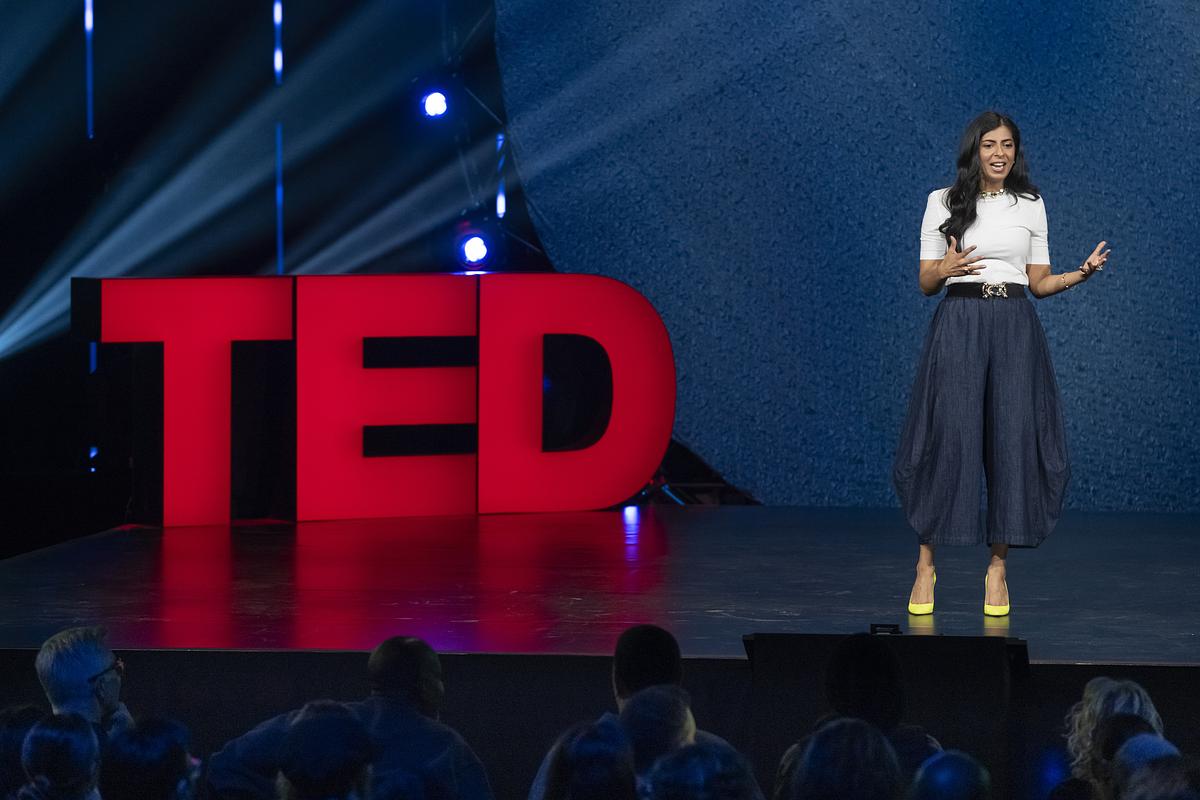
Nayeema Raza speaks at TEDNext on November 11, 2025, in Atlanta, GA. (Photo: Erin Lubin / TED)
Some pro-human takes on AI and algorithms. How do we stay “real” when algorithms and chatbots are constantly influencing our behavior to the benefit of platforms like ChatGPT, Spotify, X and others? Etymologist and content creator Adam Aleksic sounds the alarm on how AI tools are changing how we communicate — down to our very word choices — and, possibly, rewiring the underlying patterns of our thoughts, encouraging us to remember that these emerging tools aren’t neutral. Self-described “dumb questions” advocate Nayeema Raza picks up the thread of AI tools hijacking our lives — not with an anti-tech tech, but with a pro-human one. She makes a case for the return of three old habits — to pause and notice our urge to reach for our devices, to live in wonder and to ask questions out loud instead of in private — to reconnect with what actually matters in our lives.
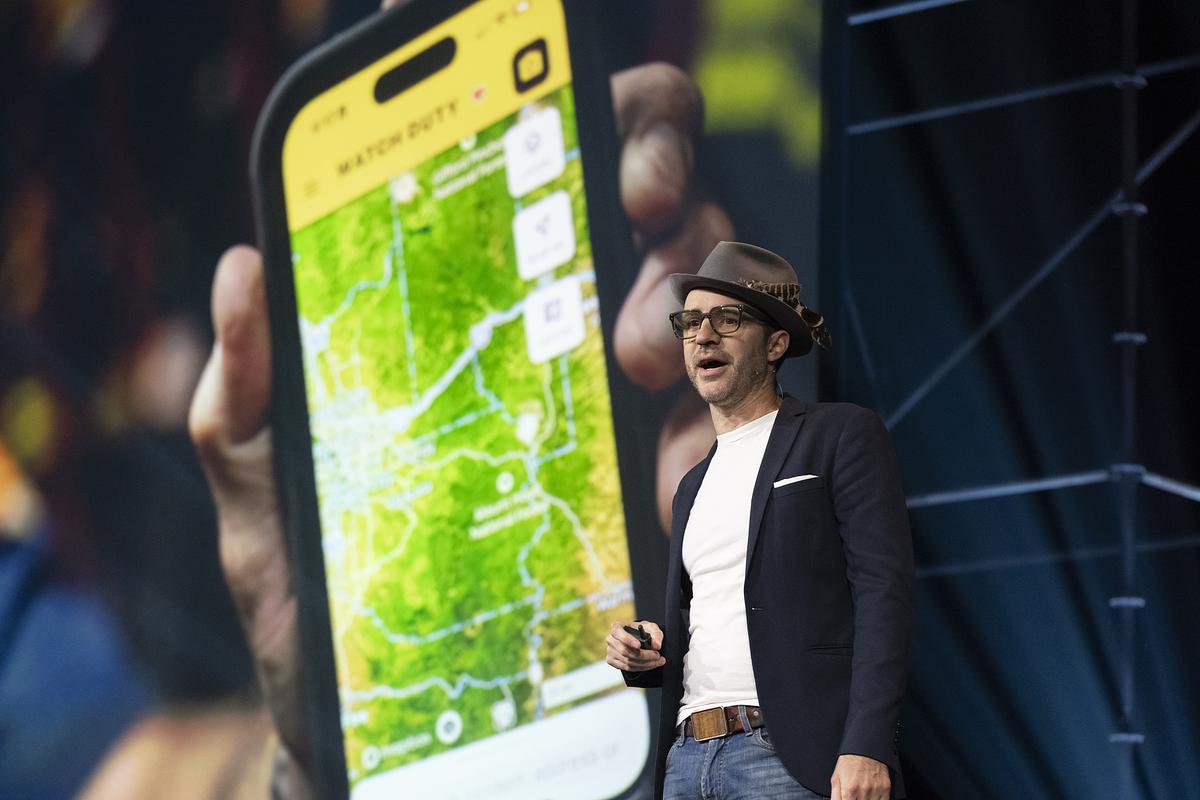
John Mills speaks at TEDNext on November 11, 2025, in Atlanta, GA. (Photo: Erin Lubin / TED)
Tech meets the natural world. After watching a series of wildfires rage around his home in Northern California in 2019, civic tech pioneer John Mills had a simple question: Where is the information? With firefighters relying on communications technology from the 1930s, often the answer was: too little, too late and too sporadic. Enter Watch Duty, a non-profit alert system Mills created with the help of a few radio operators and volunteer engineers from Silicon Valley. Developed in an 80-day sprint, Watch Duty beat government alert systems by nearly an hour just a handful of days after it launched, and it has continued to provide residents and first responders with the life-saving heads-up they need to escape danger, proving that a small group of thoughtful, committed citizens can indeed change the world. Telling another story from the positive side of tech, ocean explorer Eric Stackpole takes us into the murky depths to explore the mysterious worlds of sperm whales. Sequestered aboard a ship filming a show for National Geographic during the early days of the COVID pandemic, Stackpole and his colleagues concocted a “very maker-y” camera rig that ended up revealing a previously unreachable world — capturing footage of sperm whales communicating and coordinating for the first time on camera. “The question isn’t: ‘What can we explore?'” Stackpole says. “The real question is: ‘What will we wonder about next?'”
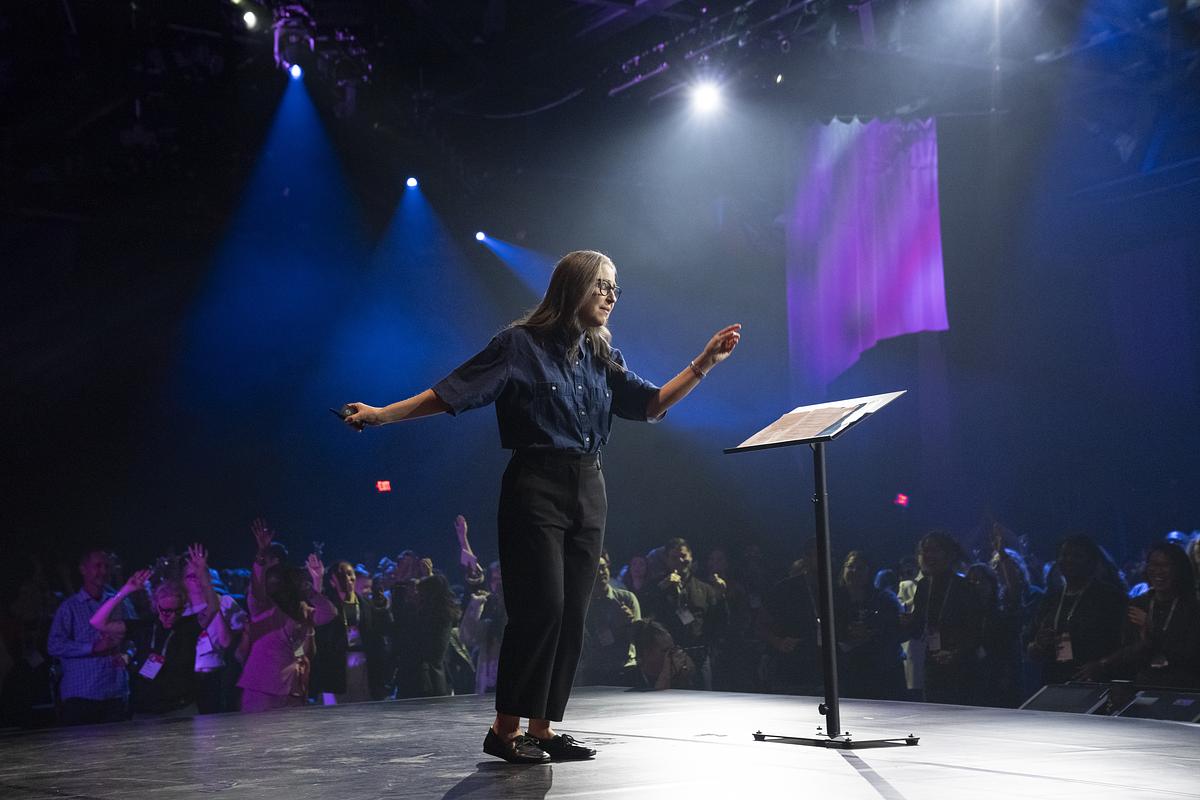
Manoush Zomorodi speaks at TEDNext on November 11, 2025, in Atlanta, GA. (Photo: Erin Lubin / TED)
New thinking on pain, the mind and body. We’ve let our screens quietly train our days into locked-down stillness, says journalist and host of NPR’s TED Radio Hour, Manoush Zomorodi, and it’s led to many of us feeling exhausted most of the time. She makes the case that tiny, regular bursts of activity baked into our days — known as “movement breaks” — can flip the body’s switches, brightening mood, sharpening focus and even regulating blood sugar. That same spirit of rethinking the obvious extends to how we think itself: in a personal talk exploring the mind’s eye, puzzle wizard and editorial director of TED-Ed Animations Alex Rosenthal shows how our inner worlds can vary wildly, and that when we build teams across those differences, creativity and problem‑solving multiply. Taking that openness into the clinic, Dr. Sanjay Gupta explores new thoughts on pain — how it isn’t just a signal in tissue but a story shaped by environment, history, sleep and support. He reveals how light, movement and connection might be as therapeutic as medicine.

Tom Sullam speaks at TEDNext on November 11, 2025, in Atlanta, GA. (Photo: Ryan Lash / TED)
The signs are everywhere — we need to stop and appreciate the wonder of the world. For a dash of whimsy, photographer and wildlife enthusiast Tom Sullam embarks on a romp through a series of ever-more-amusing wildlife photos, explaining how a sense of humor could help us get more connected to nature. In another hilarious photographic journey, designer and professor Kate Canales shares her obsession with hand-made signs — the subtle, helpful and oftentimes hysterical extra instructions we add to point-of-sale machines, doors and conspicuously in bathrooms. “No matter how you might feel about the advancement of technology in our everyday lives, these signs are evidence that humans still need each other in real life to do some of the simplest things,” she says.
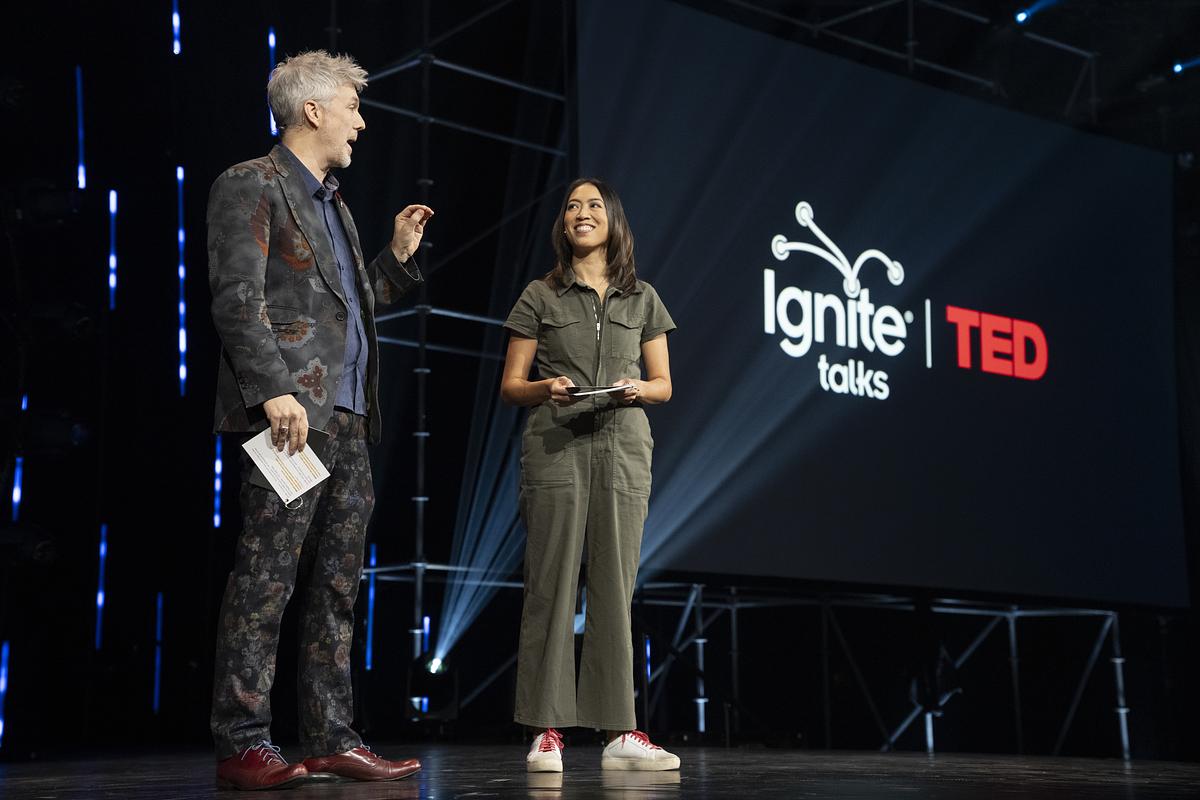
Brady Forrest (left) and Elise Hu (right) host Session 4 of TEDNext on November 11, 2025, in Atlanta, GA. (Photo: Ryan Lash / TED)
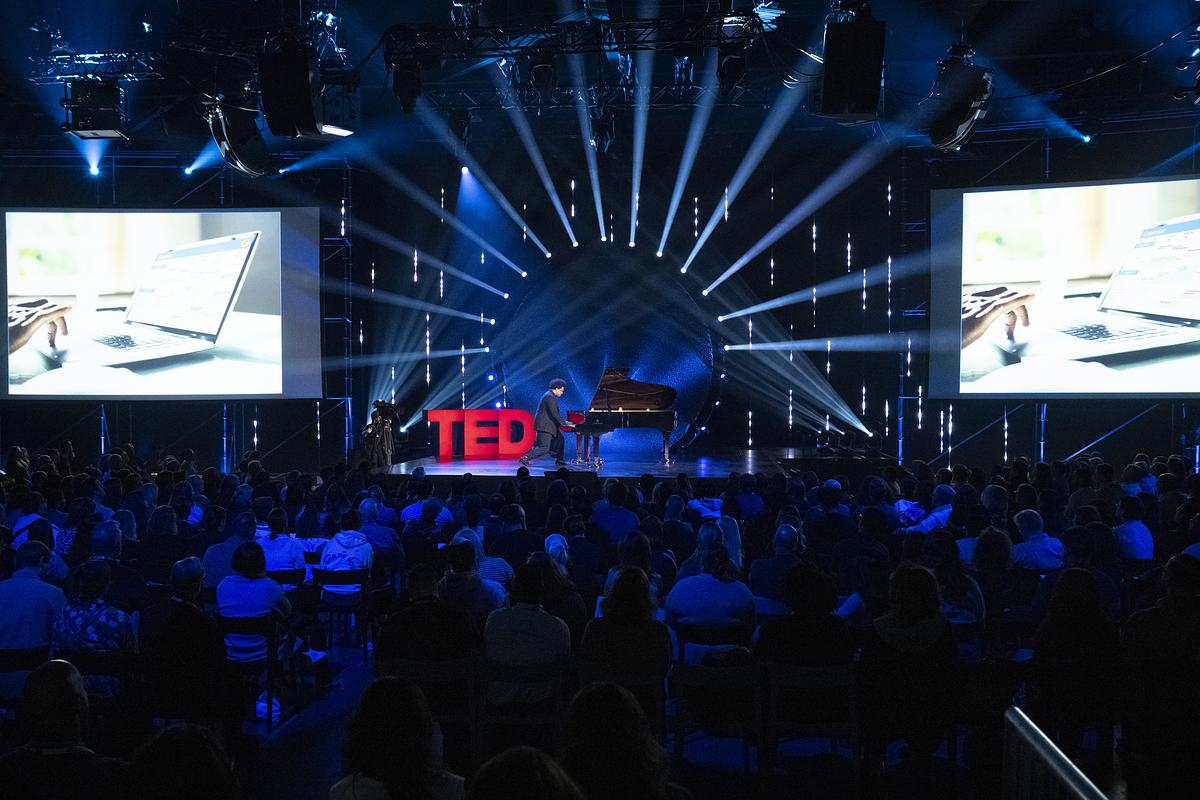
ELEW performs at TEDNext on November 11, 2025, in Atlanta, GA. (Photo: Erin Lubin / TED)
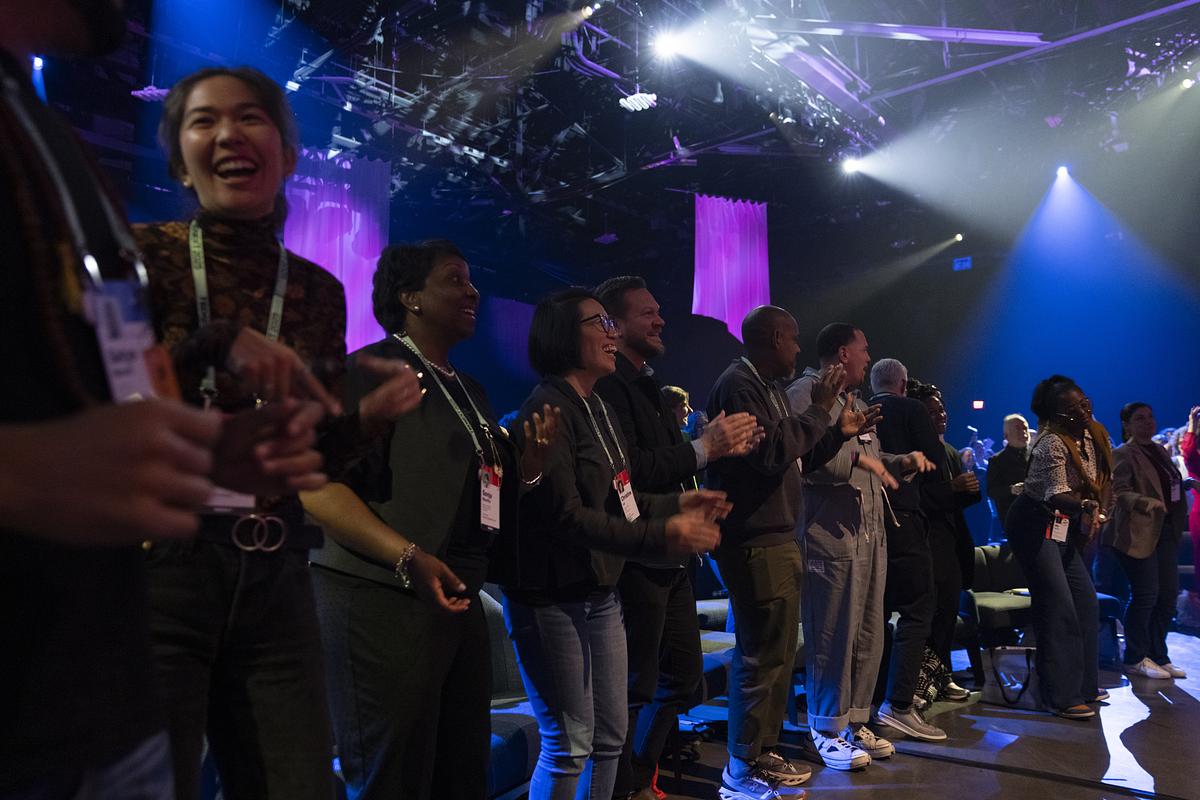
Attendees practice their “movement breaks” at TEDNext on November 11, 2025, in Atlanta, GA. (Photo: Ryan Lash / TED)

Charlene Kaye performs at TEDNext on November 11, 2025, in Atlanta, GA. (Photo: Ryan Lash / TED)
Watch TEDNext 2025 on TED Live, check out more photos from the event and learn more about attending a future TED conference.